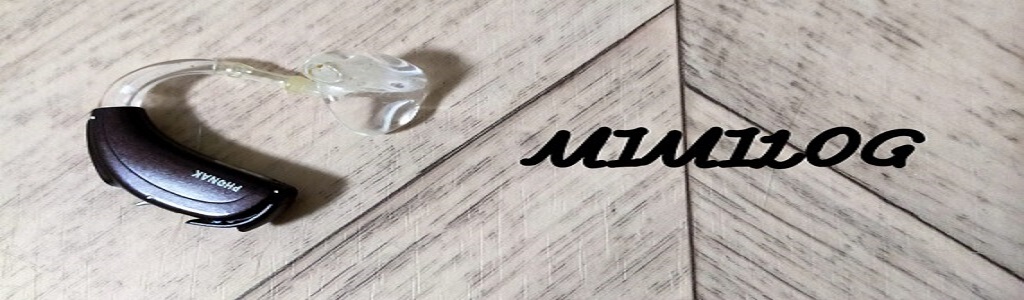

When people think of hearing loss, they often imagine someone who has difficulty hearing with both ears.
But did you know that some people have hearing loss in only one ear? This is known as unilateral hearing loss. When one ear has little or no hearing, it is also called single-sided deafness (SSD).
You might think, “If the other ear works normally, isn’t that enough?” However, hearing loss in one ear can cause more difficulties in everyday life than many people realize.
For example, it can be difficult to tell where sounds are coming from, follow conversations in noisy places, or hear someone speaking from your weaker side.
In this article, we’ll explain the causes, symptoms, diagnosis, and treatment of unilateral hearing loss. We’ll also explore ways to improve hearing, including hearing aids, CROS hearing aids, bone conduction devices, cartilage conduction hearing aids, and cochlear implants. Finally, we’ll share practical tips for making everyday conversations easier.
Whether you have hearing loss in one ear or know a family member, friend, or colleague who does, this guide will help you better understand the condition and the available options.
For a broader introduction to hearing loss, see our guide to “What Is Hearing Loss? Causes, Symptoms, Types, Diagnosis, and Treatment“.
Learn more about hearing loss↗
- What Is Unilateral Hearing Loss?
- Common Difficulties Caused by Hearing Loss in One Ear
- Common Causes of Unilateral Hearing Loss
- What Should You Do If You Suddenly Have Difficulty Hearing in One Ear?
- How Is Unilateral Hearing Loss Diagnosed?
- Treatment and Ways to Improve Hearing
- Unilateral Hearing Loss in Children
- Practical Tips for Everyday Life
- Disability Certificates and Support Systems in Japan
- Frequently Asked Questions
- Summary
- References
What Is Unilateral Hearing Loss?
Unilateral hearing loss is a condition in which a person has difficulty hearing or cannot hear at all in one ear, while the other ear has normal or near-normal hearing.
Because we have two ears, some people might think, “If one ear doesn’t work well, can’t you just rely on the other one?”
But imagine losing the use of one eye, one hand, or one leg. Would you simply say, “That’s fine because I still have the other one”?
Probably not. You would likely find that many everyday activities had become more difficult.
Hearing is similar. Even when only one ear has hearing loss, it can cause difficulties in many everyday situations.
What Is the Difference Between Unilateral Hearing Loss, Single-Sided Deafness, and One-Sided Deafness?
Several terms are used to describe hearing loss in one ear. Here is a simple explanation of the main terms:
- Unilateral hearing loss: A medical term for hearing loss affecting one ear. It includes a range of severity, from mild hearing loss to complete hearing loss in that ear.
- Hearing loss in one ear: A straightforward, everyday expression that is easy for most people to understand. It generally refers to the same condition as unilateral hearing loss.
- Single-sided deafness (SSD): A term generally used when one ear has severe to profound hearing loss or little to no usable hearing. The term one-sided deafness is also sometimes used.
In this article, we mainly use the term unilateral hearing loss to cover the condition broadly, including cases where some hearing remains in the affected ear.
How Common Is Unilateral Hearing Loss?
Unilateral hearing loss is more common than many people realize.
According to information published by Shimane Prefecture in Japan, approximately one in every 200 to 300 children may be diagnosed with unilateral hearing loss when mild cases are included. Some cases are identified through newborn hearing screening.
The Japanese information website Kikoilo, which focuses on people with hearing loss in one ear, estimates that more than 360,000 people in Japan have unilateral hearing loss.
Because the condition is not usually visible from the outside, it can easily go unnoticed. There may be more people living with unilateral hearing loss around us than we think.
Common Difficulties Caused by Hearing Loss in One Ear

We normally use both ears together to help us understand sounds and conversations. When hearing in one ear is reduced, we lose some of the advantages that come from hearing with both ears.
This can lead to several everyday difficulties, including:
- Having trouble identifying where sounds are coming from
- Finding conversations difficult to follow in noisy places
- Not noticing when someone speaks from the side with poorer hearing
- Having other people misunderstand the difficulties we experience
Difficulty Identifying Where Sounds Are Coming From
Our brain uses tiny differences in the timing and loudness of sounds reaching each ear to help determine where a sound originates.
When hearing in one ear is reduced, these differences become harder to detect, making it more difficult to identify the direction of a sound.
For example, you might:
- Look around to find someone who called your name because you cannot tell where the voice came from
- Have difficulty locating an object after dropping it
- Struggle to identify who is speaking when several people are talking together
These situations can be frustrating, even when your other ear hears well.
Difficulty Following Conversations in Noisy Places
Many people with unilateral hearing loss can manage one-on-one conversations quite well in quiet surroundings.
However, conversations can become much harder to follow in busy places such as restaurants, cafés, and train stations.
When we hear with both ears, our brain can use information from each ear to help separate speech from background noise. With hearing loss in one ear, this process becomes more difficult, especially when several sounds occur at the same time.
As a result, you may find it harder to understand what someone is saying even when you can hear their voice.
Not Noticing When Someone Speaks From Your Weaker Side
This may sound obvious, but when someone speaks from the side with poorer hearing, their voice can be difficult to detect because the head reduces the amount of sound reaching the other ear. This is known as the head-shadow effect.
Phone calls can be particularly challenging.
When you use your better-hearing ear for a phone call, you may find it difficult to notice other sounds or someone speaking nearby, especially if they are on your weaker side.
Other People May Not Understand Your Difficulties
Unilateral hearing loss is usually invisible, and many people can hold ordinary conversations without obvious difficulty in quiet environments.
As a result, other people may misunderstand the situation. They might think you are ignoring them or wonder why you could hear them earlier but cannot hear them now.
One of the challenges of unilateral hearing loss is that hearing ability can vary significantly depending on the situation.
Some people also find that they become tired more easily because they have to concentrate harder to follow conversations throughout the day.
Common Causes of Unilateral Hearing Loss
Unilateral hearing loss can have different causes. In some cases, the problem lies in the inner ear or the auditory nerve, resulting in sensorineural hearing loss. In other cases, the problem affects the outer or middle ear, resulting in conductive hearing loss.
The type of hearing loss and the symptoms a person experiences depend on the underlying cause. In other words, there is no single pattern of symptoms that applies to everyone with unilateral hearing loss.
We prepared article of “What Are the Different Types of Hearing Loss? A Simple Guide to Conductive, Sensorineural, and Mixed Hearing Loss“. Please refer it.
Learn more about type of hearing loss↗
Common Causes in Adults
Several conditions can cause hearing loss in one ear in adults.
- Sudden sensorineural hearing loss (SSNHL): A condition in which hearing suddenly deteriorates, usually in one ear. The exact cause is often unknown, although various factors have been investigated.
- Ménière’s disease: An inner ear disorder that can cause recurring episodes of hearing loss, vertigo, ringing in the ears (tinnitus), and a feeling of fullness in the affected ear.
- Mumps-related hearing loss: Hearing loss that develops as a complication of mumps, a viral infection. It often affects only one ear.
- Chronic middle ear infections and other ear conditions: Conditions such as chronic otitis media can interfere with sound transmission and may cause conductive hearing loss.
- Other causes: Head injuries and, less commonly, tumors affecting the auditory nerve, such as vestibular schwannomas, can also cause hearing loss in one ear.
Sudden sensorineural hearing loss and Ménière’s disease are associated with sensorineural hearing loss, while chronic middle ear conditions can cause conductive hearing loss.
You can learn more about these conditions in the following articles:
“What Is Sensorineural Hearing Loss? Causes, Symptoms, Treatment, and Hearing Aids Explained“
“What Is Conductive Hearing Loss? Causes, Symptoms, Treatment, and Hearing Aids Explained“
Common Causes in Children
Unilateral hearing loss in children can have several possible causes, including:
- Congenital differences in the inner ear or auditory nerve: For example, the cochlear nerve may be unusually small or underdeveloped, or the inner ear may have an atypical structure.
- Congenital cytomegalovirus (CMV) infection: An infection acquired before birth that can cause hearing loss, sometimes affecting only one ear.
- Mumps: This viral infection can cause hearing loss as a complication.
However, in many children, the exact cause remains unknown. More than half of cases may be unexplained, depending on the population studied and how thoroughly the children are evaluated.
Even when the cause cannot be identified, support can still be tailored to a child’s hearing needs.
Mumps-related hearing loss may be preventable through vaccination. If you have concerns about mumps vaccination for your child, consult your child’s pediatrician about the available options and recommendations in your area.
We prepared article of “A Parent’s Guide to Ear Infections in Children: Warning Signs and When to See a Doctor“. Please refer it.
Learn more about ear infections↗
What Should You Do If You Suddenly Have Difficulty Hearing in One Ear?
If you wake up and notice that one ear feels blocked or muffled, or if your hearing suddenly becomes worse in one ear, seek medical attention from an ear, nose, and throat (ENT) specialist as soon as possible.
Conditions such as sudden sensorineural hearing loss may respond better to treatment when it is started promptly.
It is understandable to think, “Maybe it will get better on its own.” However, if you notice a sudden change in your hearing, it is important not to wait and see whether it resolves without medical advice.
Even if the examination reveals nothing serious, getting your hearing checked can provide peace of mind.
The following symptoms are also reasons to seek medical evaluation:
- A persistent feeling of fullness or muffled hearing in one ear
- Sudden onset of ringing or buzzing in the ear (tinnitus)
- Dizziness or vertigo
- Difficulty hearing phone conversations in one ear compared with the other
Sudden hearing loss does not always come with pain, so the absence of pain does not mean the problem can be ignored.
If your hearing changes suddenly, contact an ENT specialist promptly rather than waiting for your symptoms to improve on their own.
How Is Unilateral Hearing Loss Diagnosed?

An ear, nose, and throat (ENT) specialist can perform several tests to assess your hearing and investigate the possible cause of unilateral hearing loss.
Common tests include:
- Medical history: Your doctor will ask when the hearing difficulty began, how it affects your hearing, and whether you have symptoms such as dizziness or tinnitus (ringing in the ears).
- Ear examination: The doctor checks your ears for possible causes of hearing loss, such as earwax buildup or a middle ear infection.
- Pure-tone audiometry: You listen to sounds at different pitches and volumes and press a button whenever you hear a sound. This is one of the most common hearing tests.
- Speech audiometry: This test evaluates how well you can hear and recognize spoken words.
- Tympanometry: This test measures how the eardrum moves in response to changes in air pressure, helping assess the condition of the middle ear.
- MRI or CT scans, if needed: Imaging tests may be used to examine the inner ear, auditory nerve, and surrounding structures in more detail.
For babies, hearing may be assessed through newborn hearing screening and tests such as the auditory brainstem response (ABR). ABR measures the brain’s electrical responses to sound and can be performed while a baby is asleep.
For more information about hearing tests, see these related articles:
Treatment and Ways to Improve Hearing
There are two main approaches to managing unilateral hearing loss: treating the underlying medical condition and using devices or other methods to improve access to sound.
Treating the Underlying Condition
Treatment depends on the cause of the hearing loss.
For example, sudden sensorineural hearing loss may be treated with medication, while middle ear conditions may require medical treatment or surgery.
Hearing may recover after treatment, but unfortunately, some people continue to experience permanent hearing loss.
Even when hearing does not return to its previous level, there are several ways to improve access to sounds and conversations, as explained below.
Hearing Aids

Conventional hearing aids may help when some usable hearing remains in the affected ear.
A hearing aid amplifies sound and makes it easier for the affected ear to detect sounds that might otherwise be difficult to hear.
Depending on the type and severity of hearing loss, hearing aids may improve awareness of sounds coming from the affected side and help with conversations. However, the benefits vary from person to person, particularly in noisy environments.
We prepared article of “What Are Hearing Aids? A Complete Beginner’s Guide to Types, Costs, and How to Choose the Right One“. Please refer it.
Learn more about hearing aids↗
CROS Hearing Aids
CROS stands for Contralateral Routing of Signal.
CROS hearing aids are designed for people who have little or no usable hearing in one ear but have normal or near-normal hearing in the other ear.
A microphone is placed on the side with poorer hearing. It picks up sounds from that side and wirelessly sends them to a receiver worn on the better-hearing ear.
This allows the person to hear sounds coming from the side with poorer hearing without having to turn toward the sound source.
However, CROS hearing aids route sound to the better-hearing ear rather than restoring hearing in the affected ear. As a result, they generally do not restore the ability to determine the direction of sounds in the same way that normal hearing with two ears can.
Bone Conduction and Cartilage Conduction Hearing Devices
Bone conduction and cartilage conduction hearing devices may be useful for some people with conductive hearing loss, including those who have a congenital condition that blocks or prevents the normal development of the ear canal.
A bone conduction hearing device transmits sound through vibrations in the skull, allowing sound to reach the inner ear without passing through the outer and middle ear in the usual way.
A cartilage conduction hearing aid uses vibrations delivered through the cartilage of the outer ear to transmit sound. This technology was developed in Japan.
These devices may be alternatives when conventional hearing aids are difficult to use. However, their suitability depends on the type of hearing loss, the condition of the ear, and the person’s individual hearing needs.
We prepared article of “What Is a Bone-Conduction Hearing Aid? How It Works, Cost, Pros, Cons, and Who It’s For“. Please refer it.
Learn more about Bone Cinduction Hearing aids↗
Cochlear Implants
A cochlear implant is a medical device that uses an electrode array surgically placed in the inner ear to stimulate the auditory nerve with electrical signals.
Traditionally, cochlear implants have mainly been used for people with severe to profound hearing loss in both ears. However, in 2024, the Japanese Otological Society published criteria for cochlear implantation in people with severe hearing loss in only one ear.
Under these criteria, potential candidates include people who developed severe to profound hearing loss in one ear after acquiring spoken language and whose hearing is not expected to improve with other treatments, even after at least six months have passed since the onset of hearing loss.
Studies have reported that cochlear implants may improve speech understanding in noisy environments and sound localization in some people with single-sided deafness.
However, eligibility criteria and insurance coverage vary by country. When the Japanese criteria were published in 2024, cochlear implantation for single-sided deafness was not covered by Japan’s standard public health insurance system. Its use as an advanced medical treatment was being considered by Japan’s Ministry of Health, Labour and Welfare.
For more information, see our article of “What Is a Cochlear Implant? Eligibility, Surgery Costs, and How It Sounds Explained“
Comparing the Different Options
| Option | Who It May Help | Key Features |
| Conventional hearing aid | People who have some usable hearing in the affected ear | Amplifies sound entering the affected ear. May improve hearing from that side and, in some cases, sound localization. |
| CROS hearing aid | People with little or no usable hearing in one ear and normal or near-normal hearing in the other | Sends sound from the poorer-hearing side to the better-hearing ear. Does not usually restore normal sound localization. |
| Bone or cartilage conduction device | Some people with conductive hearing loss, including certain conditions affecting the ear canal | Provides an alternative way to transmit sound when conventional hearing aids are unsuitable. |
| Cochlear implant | Selected people with severe to profound sensorineural hearing loss in one ear who meet the relevant clinical criteria | Requires surgery. May improve speech understanding in noise and sound localization in some people. |
The most suitable option depends on your hearing levels, the cause of your hearing loss, and your daily needs.
People also respond differently to hearing devices, so it is important to discuss your goals and expectations with an ENT specialist and a qualified hearing care professional. Whenever possible, try the available options before deciding which approach works best for you.
Unilateral Hearing Loss in Children
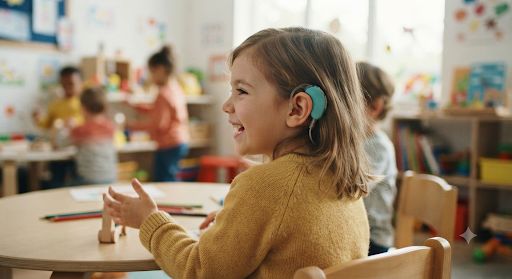
In the past, unilateral hearing loss in children was often discovered during school health checkups. Today, some cases are identified much earlier through newborn hearing screening.
When a child can hear well with one ear, they can often develop spoken language through everyday interactions. Therefore, a diagnosis of unilateral hearing loss does not automatically mean that parents need to worry excessively.
However, children with hearing loss in one ear may have difficulty hearing in noisy environments or understanding speech coming from their poorer-hearing side. A few simple adjustments by parents, teachers, and other adults can make everyday life easier for them.
Support and Accommodations at School and Preschool
The following accommodations may help children with unilateral hearing loss participate more comfortably in class and other group activities:
- Choose seating carefully: Arrange the child’s seat so that their better-hearing ear faces the teacher.
- Seat the child near the teacher: Sitting closer can make it easier to hear instructions and classroom discussions.
- Make sure important information is communicated clearly: Get the child’s attention first, face them when speaking, and use written instructions when appropriate.
- Provide visual information in noisy environments: Supplement spoken instructions with writing on the board, printed materials, or other visual aids.
Simply informing teachers which ear has better hearing can make a significant difference.
Depending on the child’s needs, a remote microphone system or another assistive listening system may also help by transmitting the teacher’s voice more directly to the child.
Financial Assistance for Hearing Aid Purchases
In Japan, unilateral hearing loss generally does not qualify a person for a physical disability certificate under the current hearing disability criteria. However, some local governments offer financial assistance to help families purchase hearing aids for children.
Eligibility varies by municipality. Some programs require hearing loss in both ears to meet specified criteria, meaning that children with unilateral hearing loss may not qualify.
If you live in Japan, contact your local municipal office to find out whether financial assistance is available in your area.
Practical Tips for Everyday Life
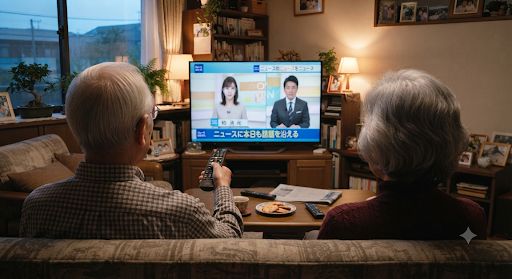
Even without using hearing devices, a few small changes can make everyday communication much easier for people with unilateral hearing loss.
Things You Can Do Yourself
- Choose where you sit: During meetings or meals, try to sit so that the people you want to hear are on your better-hearing side.
- Choose quieter places when eating out: A seat against a wall or in a corner may help reduce surrounding noise and make conversations easier to follow.
- Make phone calls in a quiet place: When you are concentrating on a phone conversation, it can be difficult to notice other sounds or people speaking nearby.
- Use captions and speech-to-text apps: Live captions and transcription tools can be particularly useful during meetings and online calls.
These adjustments may seem small, but they can reduce the effort required to follow conversations throughout the day.
Let Other People Know What Helps You
It can be helpful to explain your hearing needs in simple, specific terms.
For example, you could say:
“My right ear has difficulty hearing, so it helps if you speak to me from my left side.”
Unilateral hearing loss is not usually visible, so other people may not realize that you are having difficulty hearing. When you explain what works best for you, it becomes easier for them to communicate with you effectively.
How Family, Friends, and Colleagues Can Help
If someone in your family, among your friends, or at work has unilateral hearing loss, the following actions can make communication easier:
- Speak from the person’s better-hearing side whenever possible.
- Get their attention before speaking. You can approach them from the front or gently tap their shoulder if appropriate.
- Move to a quieter place when having an important conversation.
There is usually no need to shout. Speaking clearly and calmly is often more helpful than simply raising your voice.
Disability Certificates and Support Systems in Japan

Under Japan’s current criteria, people whose hearing loss affects only one ear generally do not qualify for a physical disability certificate for hearing impairment.
Even when hearing loss affects only one ear, it can still cause significant difficulties in everyday life. For this reason, some people may feel frustrated that their challenges are not fully recognized by the current eligibility criteria.
However, since April 2024, an amendment to Japan’s Act for Eliminating Discrimination against Persons with Disabilities has required businesses to provide reasonable accommodations to people with disabilities.
This can make it easier to request adjustments at work, at school, or in shops and other public-facing settings. For example, you can ask people to speak from your better-hearing side or request that important information also be provided in writing.
For more information, see our article on “Can You Get a Physical Disability Certificate for Hearing Loss in Japan? Eligibility Criteria, Hearing Levels, and How to Apply“
Frequently Asked Questions
Can Unilateral Hearing Loss Be Cured?
It depends on the cause.
Some conditions, such as sudden sensorineural hearing loss, may improve with prompt treatment. However, hearing does not always return to its previous level.
Even if treatment cannot fully restore your hearing, hearing aids and other assistive devices may help you hear sounds and conversations more effectively.
Can the Better-Hearing Ear Also Develop Hearing Loss?
Having unilateral hearing loss does not necessarily mean that your better-hearing ear will also develop hearing loss.
However, your better-hearing ear is especially important for everyday communication, so it is worth protecting your hearing. Avoid listening to loud sounds for extended periods and consider having your hearing checked regularly, particularly if you notice any changes.
What Should I Know About Listening to Music With Earphones?
When you listen to stereo music with only one ear, some sounds may seem to disappear because they are mixed differently between the left and right channels.
Many smartphones have a Mono Audio setting. Turning it on combines the left and right audio channels into a single mono signal, allowing you to hear the full mix through one ear rather than missing sounds assigned to the other channel.
Be sure to keep the volume at a comfortable, safe level to protect your hearing.
My Child Has Been Diagnosed With Unilateral Hearing Loss. What Should I Do?
First, arrange regular hearing checks with an ENT specialist to monitor your child’s hearing.
It is also a good idea to tell your child’s teachers which ear has better hearing and discuss helpful classroom adjustments, such as seating arrangements and making sure important instructions are clearly communicated.
If necessary, ask the hearing specialist whether hearing devices or assistive listening systems could benefit your child.
Early support and appropriate accommodations can help children participate more comfortably in school and everyday activities.
Summary
Unilateral hearing loss, also known as hearing loss in one ear, is a condition in which hearing is reduced or absent in one ear.
Although the other ear may hear normally, unilateral hearing loss can still cause difficulties in everyday life.
Here are the key points to remember:
- It can be difficult to locate sounds and follow conversations in noisy environments. You may also have trouble noticing when someone speaks from your poorer-hearing side.
- There are many possible causes. These include sudden sensorineural hearing loss, mumps-related hearing loss, and other ear conditions. In many cases, the exact cause remains unknown.
- Seek medical attention promptly if your hearing suddenly gets worse. Early evaluation and treatment may improve the chances of recovery.
- Several options can help improve access to sound. Depending on your hearing and individual needs, options may include conventional hearing aids, CROS hearing aids, bone or cartilage conduction devices, and cochlear implants in selected cases.
- Small changes in everyday life can make communication easier. Choosing where you sit, explaining your hearing needs to others, and using captions or speech-to-text apps can all help.
Because unilateral hearing loss is usually invisible, it can be difficult for others to understand the challenges you experience. You do not have to deal with these difficulties alone.
Talk with family, friends, colleagues, and hearing care professionals about what you find challenging. By exploring different support options and finding strategies that work for you, you can make everyday communication more comfortable.
References
National Institute on Deafness and Other Communication Disorders (NIDCD)

コメント