
Have you noticed that conversations have become harder to follow lately? Or that you can hear sounds but struggle to make out what people are saying? One possible cause is damage to tiny sensory cells deep inside your ears called hair cells.
Hair cells play an essential role in hearing. They convert sound vibrations into electrical signals that the brain can interpret. However, these cells can be damaged by aging, loud noise, certain illnesses, and some medications. Once hair cells are lost, they cannot currently be naturally replaced in humans.
In this article, we’ll explain what hair cells are, how they work, why they can become damaged, and how they are connected to sensorineural hearing loss. We’ll also explore the latest research into hair cell regeneration and share practical tips to help protect your hearing. Let’s start with the basics!
First, Let’s Take a Quick Look at How the Ear Works
The Ear Has Three Main Parts
When we talk about the ear, we often think of the part we can see on the side of our head. But that’s only a small part of the entire hearing system.
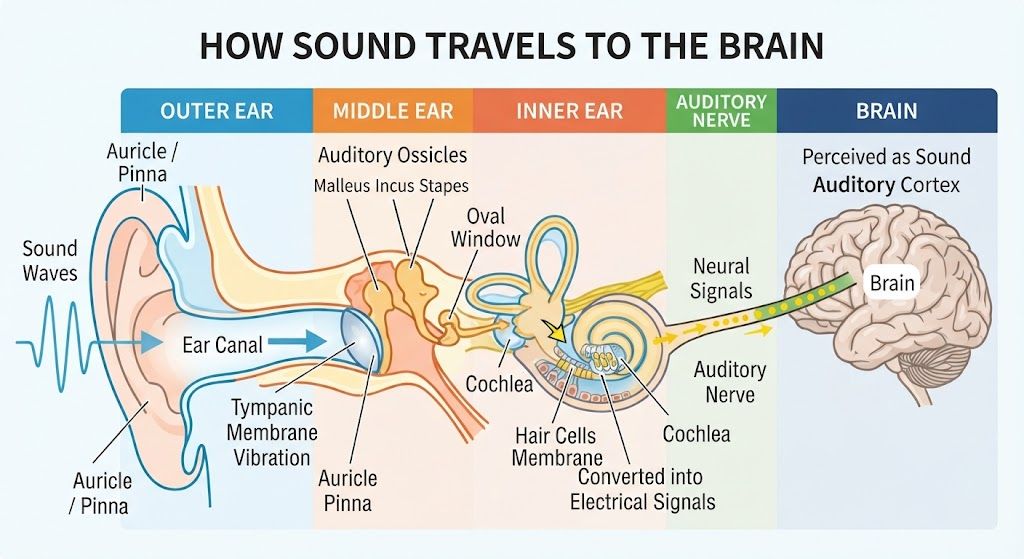
The ear has three main parts:
- Outer ear: The part that includes the visible ear and the ear canal, ending at the eardrum. It collects sound and directs it inward.
- Middle ear: The air-filled space behind the eardrum. Three tiny bones, called the ossicles, amplify sound vibrations and transmit them to the inner ear.
- Inner ear: The deepest part of the ear. It converts sound vibrations into electrical signals that the brain can interpret.
The hair cells we’ll be focusing on in this article are located in the inner ear.
How Do We Hear Sounds?
Let’s think of hearing as a relay race, with sound passing from one stage to the next.
- Sound waves enter the ear canal.
- The eardrum vibrates in response to the sound waves.
- The tiny bones in the middle ear amplify these vibrations and transmit them to the inner ear.
- Inside the cochlea, hair cells convert the vibrations into electrical signals.
- The electrical signals travel along the auditory nerve to the brain, where they are processed and recognized as sound.
If something goes wrong at any stage of this process, hearing can become difficult.
Hair cells are like the fourth runner in this relay race. Their job is to translate physical vibrations into electrical signals that the brain can understand.
What Are Hair Cells?
Hair cells are sensory cells found inside the cochlea, a spiral-shaped structure in the inner ear. The cochlea looks a little like a snail’s shell, and thousands of hair cells are arranged inside it.
As their name suggests, these cells have tiny, hair-like projections on their upper surface. These projections detect movement caused by sound vibrations and help the cells perform their essential role in hearing.
What Do Hair Cells Do?
You might think that we hear with our ears, but the brain is actually responsible for interpreting sounds.
The ears collect sound and convert it into electrical signals that the brain can process. The brain then interprets those signals and identifies what we’re hearing, whether it’s someone’s voice, a passing car, or a favorite song.
As you may remember from science class, sound travels in waves. However, the brain cannot directly interpret these physical vibrations. They must first be converted into electrical signals.
That’s where hair cells come in.
When sound vibrations move the tiny hair-like projections on these cells, they trigger a process that converts the vibrations into electrical signals. These signals travel to the brain, allowing us to recognize and understand sounds.
Inner Hair Cells vs. Outer Hair Cells
Hair cells are divided into two types: inner hair cells and outer hair cells. Although both are essential for hearing, they have different roles.
Inner hair cells convert sound-induced vibrations into electrical signals that are sent to the brain through the auditory nerve. They are the primary sensory cells responsible for transmitting sound information.
Outer hair cells help make hearing more sensitive. They amplify and fine-tune vibrations inside the cochlea, allowing us to detect quieter sounds and distinguish sounds at different frequencies more accurately.
In other words, inner hair cells send sound information to the brain, while outer hair cells help make that information clearer and easier to detect.
The human cochlea is estimated to contain approximately 3,500 inner hair cells and 12,000 outer hair cells.
Hair cells in the inner ear play an important role in detecting sound. One hearing-related phenomenon associated with the function of the inner ear is loudness recruitment, in which sounds may seem too quiet at low volumes but become uncomfortably loud as the volume increases.
Learn more about loudness recruitment in our detailed guide.
Learn more about loudness recruitment↗
Why Can Hearing Become Difficult?
You Can Hear Sounds but Still Struggle to Understand Them
When hair cells are damaged, they can no longer transmit sound information to the brain properly. As a result, the brain may have difficulty processing sounds accurately.
For example, if inner hair cells are damaged, sound vibrations may not be converted into electrical signals effectively. If outer hair cells are damaged, the cochlea loses some of its ability to amplify and fine-tune sound vibrations, making it harder to hear quiet sounds clearly.
This is why hair cell damage can cause a frustrating problem: you may be able to hear that someone is speaking, but still struggle to understand what they’re saying.
How Are Hair Cells Related to Sensorineural Hearing Loss?
There are two major types of hearing loss: conductive hearing loss and sensorineural hearing loss.
Conductive hearing loss occurs when problems in the outer or middle ear prevent sound from reaching the inner ear effectively. As a result, sounds may seem quieter than usual.
Sensorineural hearing loss, on the other hand, occurs when there is damage to the inner ear or the auditory nerve, making it difficult to transmit or process sound information correctly. Damage to the hair cells in the cochlea is a common cause of sensorineural hearing loss.
People with sensorineural hearing loss may find it difficult to understand speech, even when they can hear that someone is talking. Simply turning up the volume does not always make speech easier to understand.
Imagine looking at a photograph covered with a mosaic filter. You can still see the image, but the details are blurred, making it difficult to recognize what’s in the picture.
A similar problem can occur with hearing. Sounds may be audible, but important details can be lost, making speech harder to understand.
For more information, see our guide to sensorineural hearing loss.
Learn more about Sensorineural hearing loss↗
And we prepared article of type of hearing loss. So, please refer it.
Learn more about type of hearing loss↗
Why Do High-Pitched Sounds Often Become Harder to Hear First?
Different parts of the cochlea respond to different sound frequencies. Hair cells near the entrance of the cochlea detect high-frequency sounds, while those deeper inside respond to low-frequency sounds.
You can imagine the cochlea as a spiral-shaped keyboard, with different sections responsible for different pitches.
The hair cells near the entrance are particularly vulnerable to damage from aging and loud noise. As a result, many people gradually lose the ability to hear high-pitched sounds as they get older.
For example, they may stop noticing high-pitched beeps from thermometers or microwave ovens.
High-frequency sounds are also important for understanding speech. Many consonants, such as the sounds represented by s, f, and t, contain high-frequency information. When these sounds become difficult to hear, similar-sounding words can be harder to distinguish.
This is one reason why someone with hearing loss may hear a person speaking but struggle to make out the exact words.
How Are Hair Cells Related to Tinnitus?
Have you ever noticed a high-pitched ringing sound in your ears after attending a concert?
This may be a sign that your hearing system has been temporarily affected by loud noise. When hair cells and other parts of the auditory system are damaged, changes in the way the brain processes sound may contribute to tinnitus, the perception of sounds such as ringing or buzzing when no external sound is present.
Temporary ringing may go away on its own. However, if tinnitus persists for several days or occurs alongside hearing difficulties, it’s a good idea to consult an ear, nose, and throat (ENT) specialist.
If you experience sudden hearing loss, seek medical attention promptly rather than waiting for the symptoms to improve.
What Causes Hair Cell Damage?
Hair cells are delicate sensory cells, and several factors can damage them. Common causes include aging, exposure to loud noise, certain illnesses, medication side effects, and genetic conditions.
When hair cells are damaged, they may no longer function properly, which can lead to hearing loss.
Aging
Hair cells can become damaged over time as we age. Age-related changes in the inner ear are one of the main reasons why hearing often declines in older adults.
The inner ear is a complex and delicate organ. As we grow older, changes in the cells and tissues involved in hearing can gradually affect how well we hear.
This is one reason why older adults may find it increasingly difficult to hear conversations, especially when several people are talking or when there is background noise.
Loud Noise
Have you ever been to a live concert or listened to music at a very high volume?
Have you ever noticed ringing in your ears after being exposed to loud sounds?
Exposure to loud noise can damage the hair cells in the inner ear. After a loud event, you may experience temporary ringing in your ears or muffled hearing. These symptoms can be signs that your hearing system has been affected by the noise.
Repeated exposure to loud sounds, or a single exposure to an extremely loud sound, can cause permanent damage to hair cells and lead to lasting hearing loss.
This is why it is important to keep the volume at a safe level when using headphones or earphones and to protect your ears in noisy environments.
Illnesses
Certain illnesses can also be associated with hearing loss.
For example, some viral infections can damage the inner ear and cause permanent hearing loss. One well-known example is mumps-related hearing loss, which can occur as a complication of an infection with the mumps virus.
In some cases, hearing loss develops during childhood. My wife, for example, developed hearing loss when she was a child following an illness.
However, high fever alone does not necessarily mean that hair cells have been damaged. The underlying illness and other factors may contribute to hearing loss, so the cause cannot be determined from a fever alone.
Medications
Some medications can damage the inner ear and cause hearing loss. This type of hearing loss is known as ototoxicity, and medications that can cause it are called ototoxic medications.
However, this does not mean that all medications are harmful to hearing. Only certain medications are known to carry this risk, and the likelihood of hearing damage depends on factors such as the medication, dosage, and individual circumstances.
If you are concerned about the effects of a medication on your hearing, consult your doctor. Do not stop taking prescribed medication without medical advice.
Genetic Conditions
Genetic changes can also affect hearing from birth.
The development and function of the inner ear depend on many genes. If certain genes contain variations that interfere with normal hearing, hair cells may fail to develop properly or may not function as they should.
Some genetic conditions cause congenital hearing loss, meaning hearing loss that is present at birth. Other genetic conditions may lead to hearing loss later in life.
Can Damaged Hair Cells Recover?
Hair Cells Cannot Normally Regenerate in Humans
Unfortunately, once hair cells in the human inner ear are permanently lost, they do not naturally regenerate.
This means that hearing loss caused by permanent hair cell damage is difficult to reverse, and there is currently no established treatment that can fully restore the lost hair cells in routine clinical practice.
You may come across books or websites claiming that hearing loss can be cured. However, it is important to understand that whether hearing loss can improve depends on its cause.
For example, some types of conductive hearing loss can improve when the underlying problem is treated. Certain cases of sudden sensorineural hearing loss may also improve with prompt medical treatment, although recovery is not guaranteed.
These situations are different from permanent hearing loss caused by the loss of hair cells.
Research into gene therapy and regenerative medicine is advancing, and some experimental treatments have shown promising results for specific types of genetic hearing loss. However, these treatments are not yet widely available for most people with hearing loss caused by hair cell damage.
Learn more about gene therapy↗
What Can You Do If Your Hearing Becomes Worse?
If your hearing has declined, hearing aids and cochlear implants may help, depending on the type and severity of your hearing loss.
Hearing aids make sounds louder and can process different frequencies to better match a person’s hearing needs. They can help many people with sensorineural hearing loss hear speech more clearly, although they cannot repair damaged hair cells.
Personal sound amplifiers, sometimes called sound amplifiers, mainly make sounds louder. Unlike prescription hearing aids, they are not necessarily fitted or programmed to match an individual’s hearing loss. As a result, they may not provide the same benefit for understanding speech.
Cochlear implants work differently. They use electrical stimulation to bypass damaged or nonfunctioning hair cells and stimulate the auditory nerve directly. They may be an option for some people with severe or profound sensorineural hearing loss who receive limited benefit from hearing aids.
The most appropriate option depends on your hearing test results, the cause of your hearing loss, and your individual needs.
If you notice a change in your hearing, consult an ear, nose, and throat (ENT) specialist. Sudden hearing loss requires urgent medical evaluation because early treatment may improve the chances of recovery.
We prepared article of cochlear implant and article of hearing aids. So, please refer it.
Learn more about cochlear implant↗
How Can You Protect Your Hair Cells?
Once hair cells are permanently damaged, they cannot currently be regenerated naturally in humans. That’s why one of the best ways to protect your hearing is to take care of the hair cells you still have.
Fortunately, you don’t need to make dramatic changes to your lifestyle. A few simple habits can help reduce your risk of noise-induced hearing damage.
Pay Attention to the Volume and Duration of Headphone Use
Because earphones and headphones deliver sound close to your ears, it’s easy to listen at higher volumes than you realize.
The World Health Organization (WHO) recommends that adults limit exposure to sound levels of 80 decibels (dB) to no more than 40 hours per week. At higher volumes, the safe listening time decreases significantly.
Here are some practical ways to protect your hearing when using earphones or headphones:
- Keep the volume at a comfortable level. Avoid turning it up unnecessarily, especially in noisy environments.
- Take regular listening breaks. For example, remove your headphones periodically to give your ears a rest.
- Use noise-canceling headphones in noisy places. On trains or other noisy environments, noise cancellation can help you hear your audio without turning up the volume as much.
- Check your device’s hearing safety features. Some smartphones can track headphone sound levels and warn you when the volume is too high.
These small habits can help reduce your exposure to potentially harmful noise.
Wear Earplugs in Loud Environments
If you’re attending a live concert or working near construction equipment, earplugs can help protect your hearing from loud sounds.
There are also earplugs designed specifically for music lovers. These are often called musician’s earplugs or high-fidelity earplugs.
Unlike ordinary earplugs, which may noticeably change how music sounds, these products are designed to reduce sound levels while preserving the balance between different frequencies as much as possible.
This allows you to enjoy live music while reducing the amount of sound reaching your ears.
If you regularly attend concerts or other loud events, carrying a pair of earplugs is a simple and worthwhile precaution.
Maintain Healthy Lifestyle Habits
Hair cells depend on a healthy inner-ear environment to function properly. Although no particular lifestyle habit can guarantee that hair cells will remain healthy, taking care of your overall health is beneficial.
Here are some habits worth maintaining:
- Eat a balanced diet.
- Exercise regularly.
- Get enough sleep.
- Avoid smoking.
These are not special treatments for hearing loss. However, they support your general health and may help reduce some risk factors associated with hearing problems.
Taking care of your overall health is one part of looking after your hearing.
Have Your Hearing Checked Regularly
Hearing loss often develops gradually, so you may not notice the changes yourself.
You might find yourself asking people to repeat themselves more often or turning up the television without realizing that your hearing has changed.
Checking the results of hearing tests during routine health examinations can help you notice changes over time. If you have concerns about your hearing, you can also visit an ENT specialist for a more detailed hearing assessment.
Detecting hearing loss early can help you explore suitable treatment and hearing support options sooner.
When Should You See an ENT Specialist?
Changes in hearing can be difficult to notice, especially when they happen gradually. In some cases, family members or friends may notice the changes before you do.
If any of the following sound familiar, consider making an appointment with an ear, nose, and throat (ENT) specialist.
- You find yourself asking people to repeat themselves more often.
- Your family tells you that the television is too loud.
- You struggle to follow conversations in noisy places, such as restaurants.
- You no longer notice high-pitched sounds, such as beeps from a thermometer or doorbell.
- You experience persistent ringing or buzzing in your ears (tinnitus).
Pay particular attention if your hearing suddenly becomes worse in one ear. This could be a sign of sudden sensorineural hearing loss, a condition that requires prompt medical attention. Early treatment is important, so don’t wait to see whether your hearing improves on its own. Seek medical care as soon as possible.
A hearing test at an ENT clinic is generally painless and straightforward. In a typical test, you’ll wear headphones and signal when you hear a sound.
Even if you’re unsure whether your hearing has actually changed, getting it checked can provide reassurance and help you identify any problems early.
You don’t have to wait until your hearing becomes severely impaired to seek help. If you’ve noticed changes in how you hear or understand speech, it’s worth getting your hearing checked.
Summary: What You Should Know About Hair Cells
In this article, we’ve explored what hair cells are, how they work, and why they are so important for hearing. Let’s review the key points.
- Hair cells are sensory cells in the cochlea of the inner ear. They convert sound-induced vibrations into electrical signals that the brain can interpret.
- There are two types of hair cells. Inner hair cells transmit sound information to the brain, while outer hair cells amplify and fine-tune vibrations inside the cochlea.
- Hair cell damage can cause sensorineural hearing loss. You may still hear sounds but have difficulty understanding speech clearly.
- Hair cells can be damaged by several factors, including aging, loud noise, certain illnesses, medications, and genetic changes.
- Permanently lost hair cells cannot currently regenerate naturally in humans. However, research into gene therapy and regenerative medicine is ongoing.
- You can take steps to protect your hearing. Keep headphone volume at a safe level, wear earplugs in loud environments, maintain healthy lifestyle habits, and have your hearing checked regularly.
Hair cells are incredibly tiny, but they play a vital role in our ability to enjoy conversations, music, and the sounds of everyday life.
By understanding how hearing works and taking steps to protect it, you can help preserve your hearing for the future.
If you notice changes in your hearing, don’t ignore them. Consider consulting an ENT specialist to find out what’s happening and explore the options available to you.
We prepared article of hearing loss. So, please refer it.
Learn more about hearing loss↗
References
National Institute on Deafness and Other Communication Disorders (NIDCD): How Do We Hear?
Cochlea.eu: Hair Cells
Shibata et al. — “Gene therapy for hair cell regeneration: Review and new data”


コメント