Have you ever wondered, “How is a bone-conduction hearing aid different from a regular hearing aid?” or “What types of hearing loss can it help with?”
Most conventional hearing aids deliver sound through the ear canal. They pick up sound with a microphone, amplify and process it, and then send the sound through the eardrum and middle ear to the inner ear.
Bone-conduction hearing aids work differently. Instead of sending sound through the ear canal and middle ear, they convert sound into vibrations and transmit those vibrations through the bones of the skull to the inner ear.
Because of this different pathway, bone-conduction hearing devices can be an option for people with conductive hearing loss, problems affecting the outer or middle ear, or conditions that make it difficult to wear conventional hearing aids.
However, bone-conduction hearing aids are not suitable for everyone. The best option depends on the type and severity of hearing loss, as well as the condition of the outer ear, middle ear, and inner ear.
In this article, we’ll explain how bone-conduction hearing aids work, the different types available, their advantages and disadvantages, typical costs, possible financial assistance, and how they compare with conventional hearing aids. Everything is explained in simple terms, even if you are completely new to hearing aids.
We prepared article of hearing aids. If you don’t know hearing aids clearly, please refer it.
- What Is a Bone-Conduction Hearing Aid?
- Who Can Benefit From a Bone-Conduction Hearing Aid?
- How Does a Bone-Conduction Hearing Aid Work?
- What Types of Bone-Conduction Hearing Devices Are Available?
- Advantages of Bone-Conduction Hearing Aids
- Disadvantages of Bone-Conduction Hearing Aids
- How Much Does a Bone-Conduction Hearing Aid Cost?
- Bone-Conduction Hearing Aids vs. Conventional Hearing Aids
- Bone-Conduction Hearing Aids vs. Behind-the-Ear and In-the-Ear Hearing Aids
- What to Consider When Choosing a Bone-Conduction Hearing Aid
- Frequently Asked Questions About Bone-Conduction Hearing Aids
- Can Anyone Use a Bone-Conduction Hearing Aid?
- Can Bone-Conduction Hearing Aids Be Used for Single-Sided Deafness?
- Can Bone-Conduction Hearing Aids Be Used by People Who Cannot Hear at All?
- Can Bone-Conduction Hearing Aids Be Used Without Blocking the Ear Canal?
- Do Bone-Conduction Hearing Aids Work Better Than Conventional Hearing Aids?
- Where Can I Buy a Bone-Conduction Hearing Aid?
- Is Financial Assistance Available for Bone-Conduction Hearing Aids?
- Summary: Is a Bone-Conduction Hearing Aid Right for You?
What Is a Bone-Conduction Hearing Aid?
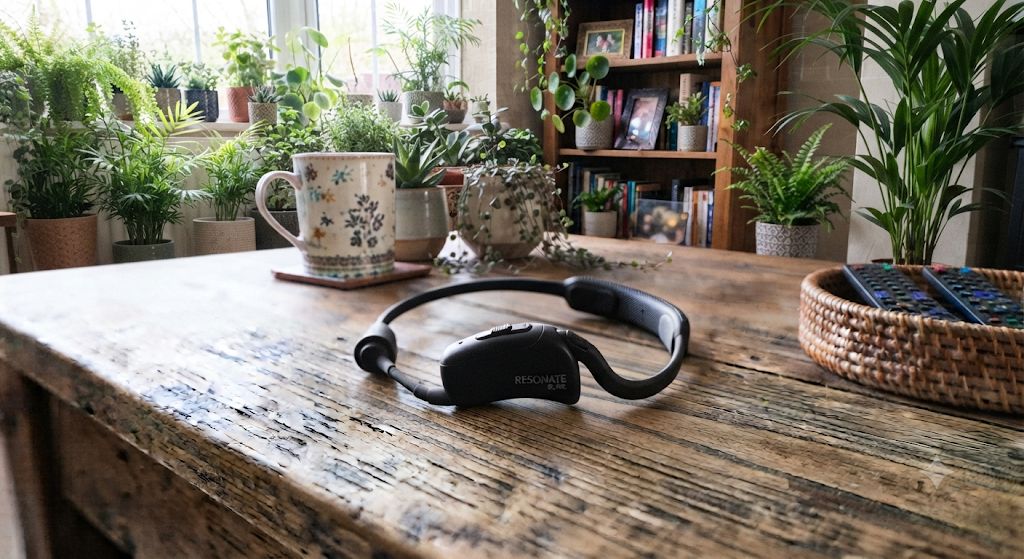
A bone-conduction hearing aid is a hearing device that uses vibrations to transmit sound through the bones of the skull to the inner ear.
Unlike conventional hearing aids, which send sound through the ear canal and middle ear, bone-conduction hearing aids use a different pathway to deliver sound to the inner ear. This can make them an option for people with problems affecting the outer or middle ear, as well as people who have difficulty wearing conventional hearing aids because of the shape or condition of their ears.
A Hearing Aid That Uses Bone Vibrations to Transmit Sound
Have you ever heard of bone conduction?
You may have seen bone-conduction headphones, which have become increasingly popular in recent years.
We don’t hear sounds only through our ears. Vibrations can also reach the inner ear through the bones in our body.
A simple example is the sound of your own voice.
When you speak, your voice sounds different to you from how it sounds when you hear a recording of yourself. This is because when you speak, you hear your own voice through both air conduction and bone conduction.
When you listen to a recording, however, the sound reaches your ears mainly through the air, so your voice can sound noticeably different.
The process of hearing sound through the air is called air conduction, while hearing sound through vibrations transmitted through the bones is called bone conduction.
A bone-conduction hearing aid uses this natural pathway to help transmit sound to the inner ear.
Conventional Hearing Aids Transmit Sound Through the Air
Most conventional hearing aids, such as behind-the-ear (BTE) and in-the-ear (ITE) hearing aids, use air conduction to deliver sound.
A hearing aid picks up sounds with a microphone and processes them to make them easier to hear. The device then amplifies the sound and sends it into the ear canal.
The sound travels through the ear canal to the eardrum, causing the eardrum and the tiny bones in the middle ear to vibrate. These vibrations are then transmitted to the inner ear.
This is essentially the same pathway used by normal hearing.
Bone-Conduction Hearing Aids Transmit Vibrations Through the Bone to the Inner Ear
Bone-conduction hearing aids use a different pathway.
Instead of relying on the ear canal and middle ear, the device converts sound into vibrations and transmits those vibrations through the skull to the inner ear.
Because the vibrations bypass the outer and middle ear, bone-conduction hearing devices can be useful for some people whose hearing loss is caused by problems in these parts of the ear.
However, bone conduction still relies on the inner ear being able to receive and process the vibrations. This means that bone-conduction hearing aids are not suitable for every type or degree of hearing loss.
Who Can Benefit From a Bone-Conduction Hearing Aid?
Bone-conduction hearing aids are not suitable for every type of hearing loss.
They may be an option for people with conductive hearing loss, which occurs when sound cannot travel normally through the outer or middle ear. They can also be considered for people who have difficulty wearing conventional hearing aids because of the shape or condition of their ears.
The most appropriate device depends on the individual’s hearing loss and the condition of their ears, so an evaluation by an audiologist or hearing specialist is important.
People With Conductive Hearing Loss
Conventional hearing aids use air conduction to send sound through the outer ear, middle ear, and eventually to the inner ear.
If there is a problem somewhere along this pathway, such as in the ear canal or middle ear, it can make it more difficult for sound to reach the inner ear effectively.
Bone-conduction hearing devices take a different route. They transmit vibrations through the skull to the inner ear, bypassing much of the outer and middle ear.
For this reason, bone-conduction hearing devices can be an option for some people with conductive hearing loss.
We prepared article of conductive hearing loss. So, please refer it.
Regarding conductive hearing loss↗
People Who Have Difficulty Wearing Conventional Hearing Aids
The shape and condition of the outer ear and ear canal vary considerably from person to person.
Some people may have an ear canal or outer ear that makes it difficult to wear a conventional hearing aid comfortably. This can occur because of differences in ear anatomy or certain medical conditions affecting the ear.
In these situations, a bone-conduction hearing device may provide an alternative way of delivering sound without placing a conventional hearing aid inside or around the ear in the usual way.
They Can Also Be Used for Single-Sided Deafness
Bone-conduction hearing devices can also be used in some cases of single-sided deafness (SSD).
When one ear has little or no usable hearing, it can be difficult to hear someone speaking from the side of the poorer-hearing ear.
Some bone-conduction devices can pick up sound on the poorer-hearing side and transmit the resulting vibrations through the skull to the inner ear on the better-hearing side. The person can then hear the sound using the better-hearing ear.
This approach does not restore hearing in the deaf ear itself. Instead, it provides access to sounds coming from the side of the poorer-hearing ear.
Other options for single-sided deafness, such as CROS (contralateral routing of signals) hearing aids, may also be considered depending on the individual’s hearing.
Bone-Conduction Hearing Aids Are Not Suitable for Every Type of Hearing Loss
Bone-conduction hearing devices can bypass problems in the outer and middle ear, but they still depend on the inner ear being able to respond to the vibrations.
For people with sensorineural hearing loss, which involves damage or dysfunction in the inner ear or auditory nerve, bone conduction may not provide enough benefit in some cases.
However, this does not mean that everyone with sensorineural hearing loss is unsuitable for a bone-conduction device. The appropriate device depends on factors such as the cause and severity of the hearing loss and how well the inner ear responds to bone-conducted sound.
In other words, a bone-conduction hearing aid is not a device that can make every type of hearing loss easier to hear. A hearing evaluation is important to determine whether it is an appropriate option for you.
How Does a Bone-Conduction Hearing Aid Work?
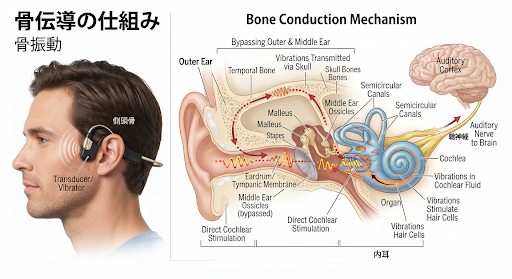
A bone-conduction hearing aid picks up sound with a microphone, processes it, and converts it into vibrations. These vibrations are then transmitted through the skull to the inner ear.
The inner ear receives the vibrations and converts them into electrical signals. The signals are then sent to the brain through the auditory nerve, where they are perceived as sound.
Vibrations Carry Sound to the Inner Ear
One of the most important features of a bone-conduction hearing aid is that it converts sound into vibrations.
Conventional hearing aids process sound and then use a speaker, or receiver, to deliver the amplified sound through the ear canal.
A bone-conduction hearing aid works differently. It first picks up sound with a microphone and processes it as an electrical signal. A component called a bone vibrator or transducer then converts the processed signal into mechanical vibrations.
These vibrations are transmitted to the skull and travel through the bone toward the inner ear.
Vibrations Travel Through the Skull to the Inner Ear
In many bone-conduction hearing devices, the vibrating transducer is positioned behind or near the ear and placed in contact with the skull.
The vibrations travel through the skull and reach the inner ear, including the cochlea.
The cochlea responds to these vibrations and converts them into electrical signals. These signals are then transmitted to the auditory nerve.
The Inner Ear Converts Vibrations Into Electrical Signals
The cochlea, a spiral-shaped structure in the inner ear, receives the vibrations.
Inside the cochlea are sensory hair cells that play an important role in hearing. When the cochlea is stimulated by vibrations, these hair cells help convert the mechanical movement into electrical signals.
The signals travel along the auditory nerve to the brain, where they are interpreted as sound.
This final stage of hearing is similar to the way sound is processed when we hear through air conduction. The main difference is how the sound reaches the inner ear in the first place.
What Types of Bone-Conduction Hearing Devices Are Available?
Bone-conduction hearing devices come in several different forms.
Some devices transmit vibrations directly through the skull, while others use the cartilage of the outer ear or use a surgically implanted component to transmit vibrations directly to the bone.
The way sound is transmitted, how the device is worn, and whether surgery is required can vary considerably between these types.
Conventional Bone-Conduction Hearing Devices
A conventional bone-conduction hearing device processes incoming sound and converts it into vibrations, which are then transmitted to the skull.
There are several ways these devices can be worn, including:
- Headband-style devices
- Bone-conduction hearing devices incorporated into eyeglasses
- Headset-style devices
Because these devices do not require an implant, they can generally be used without surgery.
However, the vibrating transducer needs to maintain sufficient contact with the skull to transmit vibrations effectively. Depending on the design, this pressure can cause a feeling of tightness or discomfort. Some people may even experience pain if the device puts too much pressure on the skin.
Cartilage-Conduction Hearing Aids
Cartilage-conduction hearing aids use the cartilage of the outer ear to transmit vibrations.
Unlike conventional bone-conduction devices, which primarily rely on transmitting vibrations through the skull, cartilage-conduction devices stimulate the cartilage around the ear.
An interesting part of this mechanism is that the vibrations can cause sound to be generated within the ear canal. That sound can then travel through the eardrum and middle ear to the inner ear.
In other words, although the device uses vibrations at the outer ear, part of the resulting sound can reach the inner ear through the ear canal and middle ear.
Cartilage-conduction hearing aids may be considered for people who have conditions such as:
- Aural atresia or ear canal atresia
- Microtia
- Chronic ear drainage or other conditions that make conventional hearing aids difficult to wear
They do not require surgery and can be worn externally.
In Japan: Cartilage-conduction hearing aids are a relatively distinctive type of hearing device and are available for certain hearing conditions. Availability and terminology may differ in other countries.
Bone-Anchored Hearing Systems
A bone-anchored hearing system uses a surgically implanted component to transmit vibrations directly to the skull.
One well-known example is BAHA (Bone Anchored Hearing Aid).
With conventional, non-implantable bone-conduction devices, some of the vibration can be reduced as it passes through the skin and other soft tissue.
A bone-anchored system can transmit vibrations more directly to the bone, which can reduce this loss and may provide more efficient transmission in appropriate users.
Potential advantages include:
- Direct transmission of vibrations to the bone
- More efficient vibration transmission than some pressure-based bone-conduction devices
- Use in certain cases of conductive or mixed hearing loss
- Use in some cases of single-sided deafness
However, because an implant is involved, surgery is required. This means that a bone-anchored hearing system is different from a conventional hearing aid that can simply be purchased and worn immediately.
The specific procedure, eligibility requirements, and available devices vary by country and medical system.
How Are These Types Different?
| Comparison | Conventional Bone-Conduction Device | Cartilage-Conduction Hearing Aid | Bone-Anchored Hearing System |
| How sound is transmitted | Bone vibrations | Vibrations through ear cartilage | Vibrations transmitted directly to the bone |
| Main pathway | Bone → inner ear | Cartilage → sound in the ear canal → eardrum → inner ear, among other pathways | Implant → bone → inner ear |
| Surgery | No | No | Yes |
| How it is worn | Transducer placed against the bone | Transducer placed against the ear cartilage | External device attached to an implant |
| Headband | May be required depending on the device | Usually not required | Not required |
| Pressure on the skin | Can occur | Generally less | Generally less after implantation |
| Ear canal atresia | May be an option | May be an option | May be an option |
| Conductive hearing loss | May be an option | May be an option | May be an option |
| Severe or profound hearing loss | Depends on the device and hearing level | May provide insufficient benefit in some cases | May be an option in selected cases |
| Typical form/examples | Headband, eyeglass-style, headset-style devices | Cartilage-conduction devices | BAHA and other bone-anchored systems |
| Main feature | Bone conduction without surgery | Uses the cartilage of the outer ear | Transmits vibrations directly to the bone |
The most appropriate type depends on the individual’s hearing loss, anatomy, and medical condition. A hearing specialist or medical professional can help determine which option is appropriate.
Advantages of Bone-Conduction Hearing Aids
Bone-conduction hearing aids have a different way of delivering sound compared with conventional air-conduction hearing aids.
Because they can bypass the outer and middle ear, they may be a useful option for people with certain types of hearing loss or ear conditions. They can also be helpful for people who have difficulty wearing conventional hearing aids because of the shape or condition of their ears.
Can Be Used Without Blocking the Ear Canal
Many bone-conduction hearing devices are worn behind or near the ear and transmit vibrations through the skull or the cartilage of the outer ear.
This means that some types can be used without blocking the ear canal.
Keeping the ear canal open can be more comfortable for people who dislike the plugged-up feeling that can occur when wearing conventional hearing aids. It may also help reduce concerns about moisture or sweating inside the ear canal.
However, the level of comfort depends on the design and wearing method of the particular device.
Can Deliver Sound When There Are Problems With the Outer or Middle Ear
Bone-conduction hearing devices can transmit vibrations to the inner ear without relying entirely on the normal pathway through the outer and middle ear.
This can be particularly useful for people whose hearing loss is caused by problems affecting the ear canal or middle ear.
For example, people with conditions that prevent sound from traveling normally through the ear canal may be able to use bone conduction to bypass the affected part of the auditory pathway.
Can Be an Option When Conventional Hearing Aids Are Difficult to Wear
Conventional hearing aids are usually worn either behind the ear or inside the ear canal.
Depending on a person’s anatomy or medical condition, however, it may be difficult or uncomfortable to wear these types of hearing aids.
Some bone-conduction devices use headbands, eyeglass-style frames, or other external designs rather than being placed inside the ear canal.
This can make them an alternative for people who cannot comfortably use conventional hearing aids.
The best option depends on the individual’s hearing loss and ear anatomy, so a hearing evaluation is recommended before choosing a device.
Disadvantages of Bone-Conduction Hearing Aids
Bone-conduction hearing aids can be a useful option for some people, but they also have limitations.
They are not suitable for every type of hearing loss, and the comfort, appearance, features, and price can vary considerably between devices.
For this reason, it is important to choose a device based on your hearing needs rather than simply choosing a bone-conduction device because it sounds like a different or more advanced type of hearing aid.
They Are Not Suitable for Every Type of Hearing Loss
Bone-conduction hearing devices can be particularly useful when hearing loss is related to problems in the outer or middle ear, such as certain types of conductive hearing loss.
However, they still depend on the inner ear and auditory pathway being able to process the transmitted vibrations.
For people with sensorineural hearing loss, especially when the inner ear is significantly damaged, a bone-conduction device may not provide enough benefit.
The amount of benefit depends on factors such as the type and severity of hearing loss and the condition of the inner ear.
In some cases, other hearing technologies may be more appropriate.
Some Wearing Methods May Be More Noticeable
Some bone-conduction hearing devices are larger or more visible than conventional hearing aids, particularly devices that use a headband or headset-style design.
Bone-conduction headphones have also become increasingly familiar, so the appearance of these devices may feel less unusual than it once did.
However, appearance is still an important consideration for some users.
If you are concerned about how noticeable a device is, it is worth comparing different designs and trying them on before making a decision.
The Sound Quality and Listening Experience May Be Different
Bone-conduction hearing devices transmit sound in a different way from conventional air-conduction hearing aids.
As a result, the listening experience and perceived sound quality may feel different.
Some users may need time to adjust to the way voices and other sounds are transmitted through bone conduction.
The sound quality also depends on the device itself, the fitting or adjustment, and the individual’s hearing condition.
There May Be Fewer Devices to Choose From
Compared with conventional hearing aids, there may be fewer manufacturers and models available in the bone-conduction hearing device market.
This can mean fewer choices when it comes to features, design, connectivity, and other functions.
The number of available devices also varies significantly from one country to another.
For this reason, it is worth checking what options are actually available in your country before deciding which type of device to use.
Prices Can Vary Significantly Between Devices
The cost of a bone-conduction hearing device can vary considerably depending on the type.
Conventional bone-conduction devices, cartilage-conduction hearing aids, and bone-anchored hearing systems have different designs and costs.
Bone-anchored systems can be particularly expensive because the total cost may include not only the external hearing device but also medical procedures and surgery related to the implant.
When comparing prices, it is therefore important to consider the total cost, including any medical treatment, fitting, follow-up care, and replacement parts that may be required.
How Much Does a Bone-Conduction Hearing Aid Cost?
The cost of a bone-conduction hearing aid can vary considerably depending on the type of device, its features, and where you live.
There are several different types of bone-conduction hearing devices, including conventional bone-conduction devices, cartilage-conduction hearing aids, and bone-anchored hearing systems. The way they are purchased and whether medical treatment is involved can also vary.
How Much Do Bone-Conduction Hearing Aids Cost?
There is no single standard price for bone-conduction hearing aids.
Depending on the type and model, prices can range from a few thousand dollars to several thousand dollars or more. Implantable bone-conduction systems can be significantly more expensive because the total cost may include surgery, medical care, and follow-up appointments in addition to the hearing device itself.
Prices also vary significantly between countries and healthcare systems.
If you are considering a bone-conduction hearing device, check the total cost rather than looking only at the price of the device itself.
How Do Bone-Conduction Hearing Aids Compare With Conventional Hearing Aids?
Conventional hearing aids also vary widely in price.
Depending on the model and features, hearing aids can cost anywhere from relatively affordable entry-level devices to several thousand dollars per ear.
Features such as noise reduction, automatic sound processing, rechargeable batteries, Bluetooth connectivity, and remote adjustments can affect the price.
In other words, the type of hearing aid alone does not determine its cost. The model, technology, features, fitting, and aftercare can all affect the final price.
Some Types Require Medical Treatment
Some bone-conduction hearing devices use an implanted component.
These bone-anchored hearing systems require a surgical procedure to place the implant. The external sound processor is then attached to the implant after the appropriate stage of treatment.
Because surgery and medical care are involved, the total cost can be considerably higher than the price of a non-implantable hearing device.
The procedure, eligibility requirements, and costs depend on the specific device and healthcare system in your country.
Financial Assistance May Be Available
Depending on where you live, government programs, health insurance, disability benefits, or other forms of financial assistance may help cover some or all of the cost of a hearing device.
Eligibility and coverage vary significantly between countries, so it is important to check the programs available in your area.
In Japan: Some bone-conduction hearing devices may be covered under Japan’s Assistive Device Expense Subsidy System (補装具費支給制度), which is provided under the Act on Comprehensive Support for Persons with Disabilities.
However, not every type of bone-conduction device is automatically covered under the standard criteria. For example, cartilage-conduction hearing aids may be considered as a special-case assistive device (特例補装具) when certain requirements are met.
The actual eligibility, amount of financial support, and application process depend on the individual’s circumstances and the applicable local government rules. People in Japan should check with their municipal government or a medical professional before purchasing a device.
We prepared article of subsidy in Japan. So, please refer it.
Bone-Conduction Hearing Aids vs. Conventional Hearing Aids
Bone-conduction hearing aids and conventional hearing aids differ mainly in how they deliver sound to the inner ear.
Conventional hearing aids use air conduction. They amplify sound and deliver it through the ear canal, eardrum, and middle ear.
Bone-conduction hearing devices use vibrations to transmit sound through the skull or, depending on the device, through the cartilage of the outer ear.
Because they use different pathways, each type may be better suited to different hearing conditions.
| Comparison | Bone-Conduction Hearing Devices | Conventional Hearing Aids |
| How sound is transmitted | Uses vibrations | Uses sound transmitted through the air |
| Ear canal | Some types do not block the ear canal | Usually delivers sound into or through the ear canal |
| Main candidates | Certain types of conductive hearing loss and specific ear conditions | A wide range of hearing loss |
| Problems with the outer or middle ear | May be an option | May provide limited benefit depending on the condition |
| How they are worn | Depends on the device | Behind-the-ear, in-the-ear, and other designs |
| Cost | Varies significantly by device and treatment | Varies from relatively affordable to several thousand dollars or more |
| Surgery | Not required for non-implantable devices | Generally not required |
The best option depends on the type and severity of hearing loss and the condition of the outer, middle, and inner ear.
For this reason, it is usually better to have your hearing evaluated before deciding which type of hearing aid to use.
We prepared article of type of hearing aids. So please refer it.
Regarding type of hearing aids↗
Bone-Conduction Hearing Aids vs. Behind-the-Ear and In-the-Ear Hearing Aids
Bone-conduction hearing devices and conventional hearing aids such as behind-the-ear (BTE) and in-the-ear (ITE) hearing aids differ not only in where they are worn, but also in how they deliver sound to the inner ear.
Understanding these differences can help you choose a hearing device that is appropriate for your hearing loss, ear condition, and lifestyle.
We prepared article of BTE. So please refer it.
And hearing aid has type of pocket style. We prepared article of pocket type also. So, please refer it.
How Are They Different From Behind-the-Ear Hearing Aids?
Behind-the-ear (BTE) hearing aids use air conduction to deliver sound.
They sit behind the ear and send amplified sound into the ear canal through a tube, earmold, or receiver, depending on the design.
Bone-conduction hearing devices, on the other hand, convert sound into vibrations and transmit those vibrations through the skull or, depending on the device, through the cartilage of the outer ear.
Because BTE hearing aids are worn behind the ear, they can sometimes interfere with glasses, masks, or other items worn around the ear.
Some bone-conduction devices use headbands, eyeglass-style frames, or other designs that do not need to hook over the ear. These designs may be more comfortable for people who have difficulty wearing conventional hearing aids.
However, the actual wearing experience depends on the specific device.
How Are They Different From In-the-Ear Hearing Aids?
In-the-ear (ITE) hearing aids are designed to fit inside the outer ear. Smaller styles, such as in-the-canal (ITC) and completely-in-canal (CIC) hearing aids, are placed partly or almost entirely inside the ear canal.
Because these hearing aids can be very small and fit inside the ear, some models can be relatively discreet.
However, wearing an in-the-ear hearing aid may be difficult for people with certain ear canal or outer-ear conditions.
Like BTE hearing aids, ITE hearing aids use air conduction. They deliver amplified sound through the ear canal rather than transmitting vibrations through the skull.
We prepared article of ITE. So, please refer it.
Who May Benefit From a Bone-Conduction Hearing Device?
Bone-conduction hearing devices may be particularly useful for people with conductive hearing loss or certain conditions affecting the outer or middle ear.
They may also be considered when the anatomy or condition of the ear makes conventional hearing aids difficult or uncomfortable to wear.
However, bone-conduction devices are not automatically the best choice for everyone with these conditions. A hearing assessment is important to determine whether the inner ear can benefit from bone-conducted sound.
Which Hearing Aid Should You Choose?
The most appropriate hearing aid depends on your hearing loss, ear condition, lifestyle, and personal preferences.
| Your situation or priority | Possible option |
| Typical sensorineural hearing loss | BTE or ITE hearing aids |
| Severe or profound hearing loss | Powerful BTE hearing aids or other appropriate hearing technology |
| Want a discreet hearing aid | ITE, ITC, or CIC hearing aids |
| Do not want to block the ear canal | Some bone-conduction devices or open-fit hearing aids |
| Ear canal atresia or similar outer-ear conditions | Bone-conduction hearing devices may be an option |
| Conductive hearing loss | Bone-conduction devices may be an option |
| Mixed hearing loss | BTE hearing aids, bone-conduction devices, or other options depending on the individual |
| Single-sided deafness | Bone-conduction devices, CROS, or other options |
| Want a simple, easy-to-handle device | Body-worn hearing aids may be an option |
| Have difficulty handling small hearing aids | Body-worn hearing aids may be an option |
| Prioritize smartphone connectivity | Many modern BTE and ITE hearing aids |
| Need a device that can be worn without placing it inside the ear | Bone-conduction devices or body-worn hearing aids, depending on the type |
CROS stands for Contralateral Routing of Signals.
A CROS system is designed for people who have little or no usable hearing in one ear and better hearing in the other. It picks up sounds from the poorer-hearing side and sends them to the better-hearing side.
It does not restore hearing in the poorer ear. Instead, it helps the user access sounds that originate on that side.
The best option depends on the individual’s hearing levels and the condition of each ear, so consultation with an audiologist or hearing specialist is recommended.
What to Consider When Choosing a Bone-Conduction Hearing Aid
Choosing a bone-conduction hearing device requires more than simply comparing prices or choosing the most powerful model.
Because these devices work differently from conventional hearing aids, it is particularly important to make sure that the device is appropriate for your type of hearing loss and the condition of your ears.
Before purchasing a device, consider having your hearing and ears evaluated, trying the device to see how it sounds and feels, and checking what fitting and aftercare services are available.
We prepared article of how to select a hearing aid. So, please refer it.
Regarding how to select a hearing aid↗
Have Your Hearing and Ear Condition Evaluated First
The most important first step is to have your hearing and ears evaluated by an ENT (ear, nose, and throat) doctor or another appropriate hearing professional.
It can be difficult to determine the best hearing device without knowing what is causing your hearing loss and which parts of the auditory system are affected.
A hearing evaluation can help determine your hearing levels and whether your hearing loss is conductive, sensorineural, or mixed.
Find Out What Type of Hearing Loss You Have
There are several major types of hearing loss, including:
- Conductive hearing loss
- Sensorineural hearing loss
- Mixed hearing loss
Bone-conduction hearing devices can be particularly useful for certain types of conductive hearing loss because they can bypass problems in the outer or middle ear.
However, the type and severity of hearing loss alone do not determine whether a bone-conduction device will work well.
The condition of the inner ear and the individual’s bone-conduction hearing thresholds are also important when determining whether this type of device is appropriate.
Try the Device and Check How It Sounds
Everyone experiences sound differently.
Even if two people have similar hearing test results, they may not perceive amplified sound in exactly the same way.
For this reason, a hearing aid that works well for one person may not feel or sound comfortable to another.
Whenever possible, try the device before purchasing it and pay attention to:
- How clearly you can hear speech
- How comfortable the device feels
- Whether the sound quality feels natural
- How well you can hear in noisy environments
- Whether you can wear the device for extended periods
A trial period can be especially helpful when available.
Don’t Choose a Hearing Aid Based on Price Alone
A more expensive hearing aid is not necessarily going to make every person hear better.
Price often reflects differences in technology, features, connectivity, design, fitting services, and aftercare—not simply how much hearing improvement the device can provide.
Instead of choosing the most expensive device, look for one that matches your hearing needs and lifestyle.
Check Fitting, Adjustments, and Aftercare
Buying a hearing aid is not the end of the process.
Proper fitting and adjustments can make a significant difference in how comfortable and useful a hearing device is.
Your hearing needs may also change over time, and the device may need to be adjusted accordingly.
Some hearing devices can be purchased online, but that does not necessarily mean they are suitable for everyone.
Before buying a bone-conduction hearing device, check whether you can receive professional support for fitting, adjustments, troubleshooting, and follow-up care.
A device with reliable aftercare can be much easier to use in the long term.
Frequently Asked Questions About Bone-Conduction Hearing Aids
If you are considering a bone-conduction hearing aid, you may have questions about who can use one, how well it works, where to buy one, and whether financial assistance is available.
Here are some of the most common questions beginners may have.
Can Anyone Use a Bone-Conduction Hearing Aid?
No. Bone-conduction hearing aids are not suitable for everyone.
They may be particularly useful for people with conductive hearing loss, certain outer or middle ear conditions, or anatomical differences that make conventional hearing aids difficult to wear.
However, the inner ear and auditory pathway also need to be functioning well enough for the device to provide benefit. The appropriate type of hearing device depends on the type and severity of hearing loss.
Before choosing a bone-conduction hearing aid, it is important to have your hearing evaluated by an audiologist or other qualified hearing professional.
Can Bone-Conduction Hearing Aids Be Used for Single-Sided Deafness?
Yes. Bone-conduction hearing devices can be an option for some people with single-sided deafness (SSD).
The device can pick up sounds on the side with poorer hearing and transmit vibrations through the skull to the better-hearing ear.
However, this does not restore hearing in the deaf ear itself. Instead, it allows the better-hearing ear to receive sounds coming from the affected side.
Other options, such as CROS hearing aids, may also be considered depending on your hearing and lifestyle needs.
Can Bone-Conduction Hearing Aids Be Used by People Who Cannot Hear at All?
It depends on the cause of the hearing loss and the condition of the inner ear.
Bone-conduction devices still rely on the inner ear to detect and process the vibrations. Therefore, simply bypassing the outer and middle ear does not mean that a person with complete hearing loss will automatically be able to hear.
For people with severe or profound hearing loss, other options such as cochlear implants may be considered depending on the individual situation.
A hearing test and medical evaluation are important before deciding which device is appropriate.
Can Bone-Conduction Hearing Aids Be Used Without Blocking the Ear Canal?
Many bone-conduction hearing devices can be used without placing a conventional hearing aid inside or directly blocking the ear canal.
This can be useful for people who experience discomfort, moisture, irritation, or other problems when wearing devices in the ear.
However, the exact wearing method depends on the type of bone-conduction device. Some devices use a headband, eyeglass-style frame, or headset, while implantable systems use a surgically implanted component.
Do Bone-Conduction Hearing Aids Work Better Than Conventional Hearing Aids?
Not necessarily.
Bone-conduction and conventional hearing aids use different pathways to deliver sound, so one is not universally better than the other.
Bone-conduction devices may be particularly helpful when problems with the outer or middle ear make conventional hearing aids less suitable.
For many types of sensorineural hearing loss, conventional air-conduction hearing aids may be more appropriate.
The best choice depends on your hearing loss, ear condition, lifestyle, and the results of your hearing evaluation.
Where Can I Buy a Bone-Conduction Hearing Aid?
Where you can purchase one depends on the type of device and your country.
Non-implantable bone-conduction hearing devices may be available through hearing clinics, audiologists, specialist hearing-device providers, or manufacturers.
Bone-anchored hearing systems are different because they involve medical evaluation and, in many cases, surgery. These systems are generally provided through specialized medical centers rather than simply purchased like a conventional hearing aid.
If you are considering a bone-conduction device, it is a good idea to consult an audiologist or ENT specialist first rather than choosing a device based only on its appearance or price.
Is Financial Assistance Available for Bone-Conduction Hearing Aids?
Financial assistance depends on your country, healthcare system, hearing loss, and the type of device.
Some countries may provide assistance through public healthcare programs, disability benefits, health insurance, or other support programs.
In Japan
In Japan, some hearing devices may be eligible for financial assistance through the Assistive Device Expense Subsidy System (補装具費支給制度) under the Act on Comprehensive Support for Persons with Disabilities.
Certain cartilage-conduction hearing aids may also be considered as special-case assistive devices (特例補装具) when the applicable requirements are met.
However, not every bone-conduction or cartilage-conduction hearing device is automatically covered. Eligibility, the amount of assistance, and the application process depend on the individual’s circumstances and local government rules.
If you live in Japan, check with your municipal government and an appropriate medical or hearing-care professional before purchasing a device.
Summary: Is a Bone-Conduction Hearing Aid Right for You?
Bone-conduction hearing aids transmit sound as vibrations through the bones of the skull, rather than relying entirely on the normal pathway through the ear canal and middle ear.
Because of this different pathway, they can be an important option for people with conductive hearing loss, certain outer or middle ear conditions, or anatomical differences that make conventional hearing aids difficult to wear.
However, bone-conduction hearing aids are not suitable for everyone.
The best choice depends on several factors, including:
- The type of hearing loss
- The severity of the hearing loss
- The condition of the outer ear and middle ear
- How well the inner ear functions
- Whether one or both ears are affected
- Comfort and ease of wearing the device
- Cost and available financial assistance
- The features and support available in your area
There are also several types of bone-conduction hearing devices, including conventional bone-conduction devices, cartilage-conduction hearing aids, and bone-anchored hearing systems. These devices differ in how they transmit vibrations, how they are worn, their cost, and whether surgery is required.
For this reason, it is better not to choose a bone-conduction hearing aid based only on price or appearance.
If you are considering one, start by having your hearing and ear condition evaluated by an audiologist, hearing specialist, or ENT doctor. Trying the device and comparing it with other hearing solutions can also help you find the option that best fits your needs.
A bone-conduction hearing aid is not simply a “better” alternative to a conventional hearing aid. It is a different type of hearing technology designed for specific hearing needs.
Understanding your type of hearing loss is the first step toward finding the right hearing solution.
We prepared article of hearing loss. If you don’t know hearing loss clearly, please refer it also.


コメント