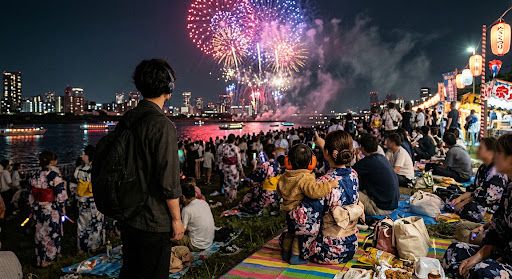
Listening to music on your earbuds. Going to a concert or a festival. Watching fireworks with your family. These are some of the best moments in life.
But loud sound can also damage your hearing. Hearing loss caused by loud sound is called noise-induced hearing loss, often shortened to NIHL.
Many people think hearing loss only happens to older adults. In fact, noise-induced hearing loss can happen to teenagers and even young children. The good news is that it is one of the few types of hearing loss you can actually prevent.
This guide explains, in plain words, how loud sound damages the ear, which warning signs to look out for, and what you and your family can do starting today.
- What Is Noise-Induced Hearing Loss?
- Why It Is Becoming More Common in Young People and Children
- Warning Signs to Watch For
- How Loud Is Too Loud?
- Can Noise-Induced Hearing Loss Be Cured?
- Simple Ways to Prevent Noise-Induced Hearing Loss
- If You Work in a Noisy Place
- How Parents Can Protect Their Children
- Choosing Earplugs and Earmuffs
- Summary
- References
What Is Noise-Induced Hearing Loss?
Noise-induced hearing loss happens when loud sound damages the inner ear, making it harder to hear.
Deep inside your ear there are tiny sensory cells called hair cells. They have small hair-like bundles on top, and their job is to turn sound vibrations into signals your brain can understand.
When you are exposed to loud sound again and again, these hair cells are slowly damaged. Sounds start to seem quieter, and speech becomes harder to make out. Hearing loss that starts in the inner ear like this is called sensorineural hearing loss.
→ Learn more about sensorineural hearing loss
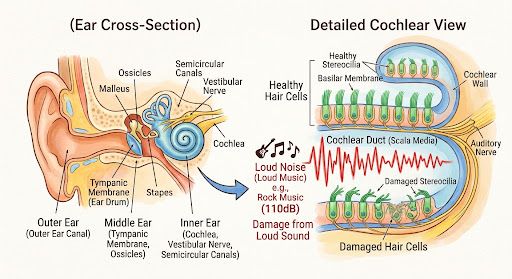
There are two main types of hearing damage from loud sound:
- Damage that builds up slowly over time: from daily earbud use or a noisy job. This is what most people mean by noise-induced hearing loss.
- Damage from one very loud sound: such as standing right next to a speaker at a concert, or an explosion. This is sometimes called acoustic trauma.
Hearing loss from headphones and earbuds is part of the same family. It is noise-induced hearing loss that comes from a personal music device.
→ Learn more about hearing loss from headphones and earbuds
Why It Is Becoming More Common in Young People and Children
Noise-induced hearing loss used to be seen mainly as a problem for factory and construction workers. Today it affects people of all ages.
The World Health Organization (WHO) estimates that more than 1 billion young people aged 12 to 35 are at risk of hearing loss because of loud music and other sounds they enjoy. Smartphones and earbuds make it easy to listen anywhere, for hours at a time, and that is a big part of the problem.
Children are also in the spotlight. The theme of World Hearing Day 2026 (March 3) was From communities to classrooms: hearing care for every child, with a focus on preventing avoidable hearing loss in children.
Warning Signs to Watch For
Noise-induced hearing loss is painless and develops slowly, so it is easy to miss. Ask yourself if any of these sound familiar:
- Your ears ring for a while after a concert or karaoke night
- Your ears feel blocked or full
- You ask people to repeat themselves more often
- You keep turning up the volume on the TV or your earbuds
- You find it hard to follow conversations in busy places
I love live music and used to go to concerts all the time. I would stand close to the speakers and have the time of my life, and afterward my ears would ring and sometimes even hurt.
Back then, I just thought it had been a great night. Now I know that the ringing and the pain were my ears telling me they had taken too much.
Ringing after a concert often fades by the next day. Think of it as a sign that your ears are tired. If it keeps happening, the damage can add up and become permanent.
If the ringing keeps coming back or does not fade, it may be tinnitus. Our guide to tinnitus explains the causes and when to get checked.
Noise-induced hearing loss usually affects high-pitched sounds first. Because most speech sounds are still clear at the beginning, many people do not notice until the loss has progressed. If you are worried, ask your doctor about a hearing test.
Some people also notice that ordinary sounds feel painfully loud after a very loud event. This is called hyperacusis, and it can happen even when a hearing test is normal. Learn more about hyperacusis.
How Loud Is Too Loud?
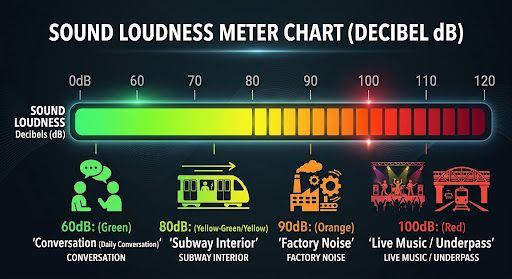
Sound is measured in decibels (dB). The higher the number, the louder the sound.
The risk to your ears depends on two things: how loud the sound is, and how long you listen. The louder the sound, the less time it takes to cause damage.
Everyday sounds and how loud they are
| Sound level | Example |
|---|---|
| About 60 dB | Normal conversation |
| About 75 dB | Vacuum cleaner |
| About 85 dB | Heavy city traffic heard from inside a car |
| About 95 dB | Motorcycle |
| About 100 dB | Subway train, hair dryer, car horn nearby, near the speakers at a concert |
| About 105 dB | Music player at maximum volume, chainsaw |
If you are on a noisy train and turn your earbuds up to drown out the noise, you may be putting a lot of strain on your ears.
Safe listening limits for headphones and earbuds
WHO and the International Telecommunication Union (ITU) recommend these weekly limits for personal audio devices:
| Volume | Time | |
|---|---|---|
| Adults | 80 dB or lower | Up to 40 hours a week |
| Children | 75 dB or lower | Up to 40 hours a week |
The key point: children should listen at a lower volume than adults. Many smartphones can now track how loud and how long you listen, and warn you when you reach the limit. It is worth checking the settings on your phone.
Can Noise-Induced Hearing Loss Be Cured?
Temporary dullness or ringing after a loud event can recover with rest.
However, hearing loss that has built up over a long time cannot currently be reversed. Researchers are working on new treatments, but none are ready for everyday use yet.
That is why prevention is the best protection. The good news is that noise-induced hearing loss is preventable, and the tips below really help.
If you suddenly lose hearing in one ear, or if ringing or a blocked feeling does not go away by the next day after loud sound, see a doctor as soon as possible. Sudden hearing loss has a better chance of recovery when treatment starts early.
→ Learn more about sudden hearing loss
Simple Ways to Prevent Noise-Induced Hearing Loss
You do not have to give up music or concerts. Just paying a little attention to volume, time and distance makes a real difference.
1. Keep the volume down and take breaks
Avoid turning up the volume to cover background noise. Try to take a 10-minute break from your earbuds about once an hour. Noise-cancelling headphones can help you enjoy music at a lower volume, but stay aware of traffic when you are walking or cycling.
2. Keep some distance from the speakers
At concerts and clubs, simply moving away from the speakers lowers the strain on your ears. Stepping into a quieter area for a few minutes now and then also helps.
3. Use earplugs or earmuffs
Musician earplugs (also called high-fidelity earplugs) lower the volume while keeping the music clear. For young children, earmuffs that cover the whole ear are usually easier to use.
4. Give your ears a quiet day after a loud event
After a concert, it is tempting to keep the music going on the way home. Instead, give your ears a rest. Skip the earbuds, or keep the volume low for the rest of the day.
If You Work in a Noisy Place
Noise-induced hearing loss is also a common work-related condition. People in construction, manufacturing, mining and the music industry are at higher risk.
Daily time limits for workplace noise
The U.S. National Institute for Occupational Safety and Health (NIOSH) recommends keeping workplace noise below 85 dBA averaged over an 8-hour day. For every 3 dB increase, the safe time is cut in half.
| Noise level | Recommended maximum per day |
|---|---|
| 85 dBA | 8 hours |
| 88 dBA | 4 hours |
| 91 dBA | 2 hours |
| 94 dBA | 1 hour |
| 97 dBA | 30 minutes |
| 100 dBA | 15 minutes |
The exact legal rules differ from country to country. For example, in the European Union, employers must offer hearing protection from 80 dB, workers must wear it from 85 dB, and exposure must never exceed 87 dB. Ask your employer or local health and safety authority what applies to you.
What workers can do
- Wear earplugs or earmuffs correctly, with no gaps
- Take breaks in a quiet place when you can
- Keep earbud volume low after work so your ears can rest
- Take part in hearing tests offered at work and check your results
- If hearing problems or ringing continue, see a doctor and talk to your workplace health staff

Living in Japan? In April 2023, the Ministry of Health, Labour and Welfare revised its guidelines on preventing noise-related hearing damage at work. Employers are asked to keep noise exposure below 85 dB, appoint a person in charge of noise control, choose hearing protection based on its noise reduction rating, and use more sensitive hearing checks in health screenings. For personal audio, the Japan Society of Otorhinolaryngology-Head and Neck Surgery supports the WHO limits of 80 dB for adults and 75 dB for children.
How Parents Can Protect Their Children
Children often cannot tell you that their ears are under strain. A little attention from parents goes a long way.
- Set volume limits on tablets and game consoles. The safe level for children is 75 dB or lower, and most devices have parental volume controls.
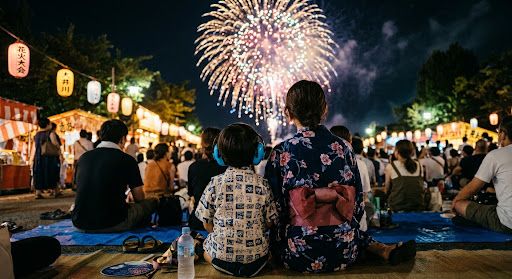
- Bring earmuffs to loud events. Fireworks, concerts, sports games and motor racing are all good reasons to pack a pair.
- Choose earmuffs for small children. Earplugs are small and can be a choking hazard for young kids. Always check the recommended age.
- Make ear breaks a family habit. Instead of scaring children with warnings, try saying that ears need a rest, just like eyes do.
- Talk to a doctor if you notice changes. If your child keeps turning up the TV or often does not respond when called, have their hearing checked.
Choosing Earplugs and Earmuffs
Many people worry that earplugs will make music sound muffled. Musician earplugs are designed to lower the volume evenly, so music still sounds clear, just quieter.
When choosing hearing protection, look for:
- For concerts and festivals: reusable musician earplugs with a filter, usually reducing sound by around 15 to 20 dB
- For frequent concert-goers and musicians: earplugs with swappable filters, so you can adjust the level to the venue
- For young children: lightweight, adjustable earmuffs made for kids, with a clear age range on the box
- For school-age children: small-sized earplugs made for kids, used with an adult checking the fit
Whatever you choose, a good fit matters more than anything. Hearing protection only works when it seals well.
Summary
Noise-induced hearing loss happens when loud sound damages the hair cells in the inner ear. Because everyday sounds like earbuds and concerts can cause it, young people and children are at risk too.
- Once it builds up, it usually cannot be reversed, so prevention matters most
- For earbuds, aim for 80 dB or lower for adults and 75 dB or lower for children, up to 40 hours a week
- Take a break from your earbuds about once an hour
- Bring earplugs or earmuffs to concerts and fireworks
- If your hearing suddenly gets worse, see a doctor quickly
Music and live events can be part of your life for many years to come. Let us take care of our ears together, as a family.
To learn more about hearing loss in general, see these guides:
→ Different Types of Hearing Loss
→ Why Older Adults Lose Their Hearing

コメント