
“The TV seems louder these days.” “I keep asking people to repeat themselves.” Have you or someone in your family noticed changes like these?
Losing some hearing as we get older is natural, and it can happen to anyone. But it happens at different speeds for different people, and there are things you can do in daily life to protect your hearing.
In this article, we explain why hearing often gets worse with age, why some people are more likely to lose their hearing than others, and what you and your family can start doing today.
If you’d like to learn the basics of hearing loss first, such as its types and symptoms, see What Is Hearing Loss? Causes, Symptoms, Types, Diagnosis, and Treatment.
The main cause: age-related hearing loss
When hearing slowly gets worse as we age, it is called age-related hearing loss (doctors call it presbycusis). This is the most common reason older adults have trouble hearing.
Tiny “sound-sensing cells” in the inner ear wear out over time
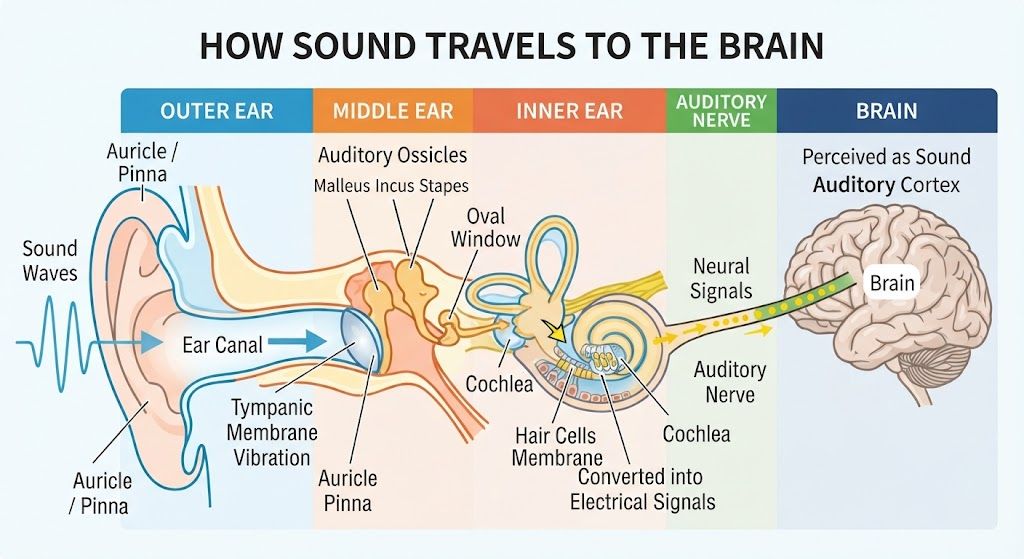
Deep inside your ear, there are tiny cells that pick up sound and send signals to your brain. They are called hair cells. After many years of use, these cells slowly wear out. Once they are damaged, they do not grow back. This is the main way age-related hearing loss happens.
→ Learn more: What Are Hair Cells in the Ear? Why Does Damage Cause Hearing Loss?
High-pitched sounds are the first to go
With age-related hearing loss, high-pitched sounds usually become hard to hear first. Examples include the beep of a thermometer or a microwave.
In conversation, sounds like “s,” “f,” and “th” become harder to catch. Many people say, “I can hear that someone is talking, but I can’t understand the words.”
Because it happens slowly, family and friends often notice the change before the person does.
How common is it?
According to the World Health Organization (WHO), more than 1 in 4 people over the age of 60 have hearing loss that affects their daily life.
So if you have trouble hearing, you are not alone, and there is nothing to be embarrassed about.
Why some people lose their hearing faster than others
Two people of the same age can hear very differently. The difference comes from a mix of things you can’t change and things you can.
Things you can’t change
- Age: The cells in the ear naturally become weaker over time.
- Genes and family history: Many genes affect hearing. In some families, hearing loss starts early. If your parents or relatives lost their hearing early, it’s a good idea to get your hearing checked sooner.
Things you can change
- Loud noise: Years of loud noise, such as from factories, construction sites, or earphones at high volume, slowly damage your ears.
- Diabetes, high blood pressure, and hardened arteries: The inner ear gets its nutrients through very tiny blood vessels. Health problems that affect blood flow can affect hearing too.
- Smoking: Smoking for many years can harm your blood vessels, and this can also harm your hearing.
- Some medicines: Some cancer drugs and antibiotics can affect hearing as a side effect. Please don’t stop taking any medicine on your own. If you are worried, talk to your doctor or pharmacist. → Drug-Induced Hearing Loss: Causes, Symptoms, and Recovery
Sometimes the cause is earwax or an ear infection
Sometimes what seems like “just getting older” is actually earwax buildup or a middle ear infection. In these cases, treatment may bring your hearing back. That’s why it’s a good idea to see an ear doctor at least once. → What Is Conductive Hearing Loss?
If you suddenly lose hearing in one ear, or you also have ringing in your ears or dizziness, the cause may not be aging. Please see a doctor as soon as possible. → Sudden Hearing Loss: Symptoms, Causes, Treatment, and When to See a Doctor
Signs to watch for: for you and for your family
A self-check for you
- You often say “What?” during conversations
- People have told you the TV or radio is too loud
- It’s hard to follow conversations in noisy places like restaurants
- You sometimes miss the beep of a microwave or thermometer
- You don’t notice when someone talks to you from behind
- You’ve started to avoid talking with people because you worry about mishearing
If two or more of these sound familiar, it’s a good idea to get your hearing tested.
Changes your family may notice
- They often don’t answer when you call them
- Their answers don’t quite match what you said
- They don’t answer the phone or the doorbell, or they avoid it
- They talk less at family meals or gatherings, or stop going to them
Many people believe they are hearing just fine. That’s why family members noticing these signs can make a big difference.
What you can do today to protect your hearing
There is no way to fully stop age-related hearing loss. But you can slow it down and make it affect your daily life less.
Protect your ears from loud noise
Keep the TV and earphones at a volume that feels “a little quiet,” and take breaks when you listen for a long time. Wear earplugs or earmuffs when using loud tools like lawn mowers.
At concerts or karaoke, you can use special earplugs for music. They lower the volume while keeping the music sounding clear.
Take care of your blood pressure and blood sugar, and stop smoking
Keeping the blood vessels in your inner ear healthy helps protect your hearing. Follow up on your health check results, keep up with treatment for high blood pressure or diabetes, and try to cut down on smoking or quit.
Eat a balanced diet
A balanced diet with fish and vegetables helps keep your blood vessels healthy. But for older adults, eating too little can weaken the muscles. Right now, there is no strong evidence that any supplement improves hearing. The basics are simple: eat well and stay active.
Don’t ignore hearing problems
If hearing problems are left alone, people may start to avoid conversations and going out, and they can lose touch with others.
A major international report on preventing dementia (published in the medical journal The Lancet in 2024) listed 14 risk factors that people can do something about. Hearing loss was named as one of the most important.
This does not mean that everyone with hearing loss will get dementia. Instead, it means that caring for your hearing is a positive step you can take starting today. Some studies have also found that people who use hearing aids show a slower decline in memory and thinking than people who don’t.
→ Learn more: How Hearing Loss Affects Dementia Risk: A Family Guide for Living With an Aging Parent
How family members can help: tips for clear communication
When talking with a family member who has trouble hearing, try to speak clearly, not just loudly.
- Face them and get their attention first: Seeing your mouth and face helps them understand.
- Speak slowly and clearly: Shouting can actually make your voice sound distorted and harder to understand. (Learn why in Why Shouting at Someone with Hearing Loss Can Backfire.)
- Say it a different way: If they didn’t catch it, try new words instead of repeating the same ones. For example, change “next Tuesday” to “in three days.”
- Move away from noise: Turning off the TV or choosing a quiet seat makes a big difference.
- Write down important things: Dates and places are easier to remember when written on paper.
Making the TV easier to hear

“The TV is too loud to watch together” is a common problem in many homes. Here are some simple ideas:
- Turn on captions (subtitles): Reading the words while listening makes TV much easier to follow.
- Use a TV speaker made for clear speech: Some speakers are designed to make voices clearer without turning up the volume. You just put one near the person and connect it to the TV.
- Use wireless TV headphones: The person can listen at their own volume while everyone else hears the normal TV sound.
When you suggest a hearing test, try saying “I’d love to talk with you more easily” or “It’s good to get checked just to be safe,” instead of “You can’t hear well.” This makes the idea easier to accept. If you can, go to the appointment together.
Where to get help
If you are worried about your hearing, the first step is a hearing test. Talk to your family doctor, or see an ear, nose, and throat (ENT) doctor or an audiologist (a hearing care specialist). If the cause is earwax or an illness, treatment may help. → What Is Tympanometry? A Simple Guide to the Test
If you decide to try hearing aids, it’s best to get them from a professional who can test your hearing, let you try them, and adjust them for you. In some areas, there are programs that help pay for hearing aids, so it’s worth asking your doctor or local health office. → How to Choose the Right Hearing Aid: A Complete Beginner’s Guide
Summary
- The main reason older adults lose their hearing is age-related hearing loss, caused by the tiny cells in the inner ear wearing out.
- Age and genes play a part, but so do things you can change, like loud noise, health problems such as diabetes, and smoking.
- Family often notices hearing changes first. If you’re worried, get a hearing test.
- Small changes in how you talk can make communication much easier.
The sooner you notice hearing changes and take action, the easier it is to keep enjoying conversations and the things you love. The moment you think “Hmm, something’s a little off” is the perfect time to get help.
References
- World Health Organization. Deafness and hearing loss (Fact sheet)
- Livingston G, et al. Dementia prevention, intervention, and care: 2024 report of the Lancet standing Commission. Lancet. 2024.


コメント