Hearing aids can cost anywhere from tens of thousands to several hundred thousand yen, so you may be wondering, “Is there any financial assistance that can make hearing aids more affordable?”
In Japan, people with hearing loss that qualifies as a hearing disability may be able to receive financial assistance from their local government through a program called the Assistive Device Expense Subsidy Program (補装具費支給制度).
Under this program, the user’s out-of-pocket cost is generally 10% of the amount covered by the program. However, not everyone is eligible. Eligibility depends on factors such as the severity of hearing loss, the type of hearing aid needed, medical necessity, and household income.
It is also important not to purchase a hearing aid before receiving approval from your municipality.
In this article, we will explain the Japanese hearing aid subsidy system in simple terms, including who is eligible, how much financial assistance you may receive, which types of hearing aids may be covered, how to apply, and what you should be careful about.
If you are wondering, “Can I receive financial assistance?” or “What should I do before buying a hearing aid?”, this guide should help.
Important: The system explained in this article is a Japanese government and local-government program. The rules described here apply to people living in Japan and should not be assumed to apply in other countries.
We prepared article of hearing aids. So, please refrr it.
- What Is the Hearing Aid Subsidy Program in Japan?
- Do You Need a Physical Disability Certificate to Receive a Hearing Aid Subsidy in Japan?
- How Much Can You Save on a Hearing Aid Through the Program?
- Which Hearing Aids Are Covered by the Program?
- Is the Program Different for Children and Adults?
- What Are the Eligibility Requirements for the Hearing Aid Subsidy?
- You Generally Need a Physical Disability Certificate
- A Hearing Aid Must Be Considered Necessary
- You Need Approval From Your Municipality
- The Hearing Aid Must Meet the Program’s Requirements and Standard Amounts
- Can the Assistive Device Expense Subsidy Program Be Used for Hearing Aid Repairs?
- How Many Years Do You Need to Use a Hearing Aid Before Replacing It?
- How to Get a Hearing Aid Through the Subsidy Program
- What Documents Do You Need to Apply?
- Important Things to Know Before Using the Hearing Aid Subsidy
- How Is the Subsidy Program Different From Buying a Hearing Aid Normally?
- Frequently Asked Questions About Hearing Aid Subsidies in Japan
- Can I Receive a Hearing Aid Subsidy Without a Physical Disability Certificate?
- Can I Get a Hearing Aid for Free?
- Can I Receive Hearing Aids for Both Ears?
- Can the Program Be Used for Hearing Aid Repairs?
- How Often Can I Replace My Hearing Aid?
- Can I Apply After Buying a Hearing Aid?
- Can Older Adults Use the Assistive Device Expense Subsidy Program?
- Can Children Use the Program?
- Is This Different From Local Government Hearing Aid Subsidies?
- There Are Other Hearing Aid Assistance Programs in Japan
- 5 Things to Check Before Buying a Hearing Aid With the Subsidy Program
- Summary: Contact Your Municipality Before Buying a Hearing Aid
What Is the Hearing Aid Subsidy Program in Japan?
Have you ever heard of Japan’s Assistive Device Expense Subsidy Program (補装具費支給制度)?
This is a Japanese public assistance program that can help cover part of the cost of certain assistive devices, including hearing aids, when a person meets specific eligibility requirements.
The user’s out-of-pocket cost is generally 10% of the covered amount, although an upper limit may apply depending on household income.
However, not every hearing aid is automatically covered. The hearing aid must meet the requirements of the program, and you generally need to receive a subsidy decision from your municipality before purchasing it.
A Program Based on Japan’s Act on Comprehensive Support for Persons with Disabilities
Japan has a law called the Act on Comprehensive Support for Persons with Disabilities (障害者総合支援法).
The Assistive Device Expense Subsidy Program is established under Article 76 of this law.
For people living in Japan, this is an important program to know about if they have a qualifying disability and need an assistive device such as a hearing aid.
Hearing Aids Are Only One Type of Assistive Device
The program is not limited to hearing aids.
Examples of assistive devices covered by the system include:
- Prosthetic limbs
- Orthotic devices
- Wheelchairs
- Powered wheelchairs
- Hearing aids
- White canes for people with visual disabilities
- Communication devices for people with severe disabilities
In other words, hearing aids are just one category of assistive device covered by this Japanese public support system.
Do You Need a Physical Disability Certificate to Receive a Hearing Aid Subsidy in Japan?
For hearing aids provided through this program because of hearing loss, having a Physical Disability Certificate (身体障害者手帳) is an important eligibility requirement.
However, there are exceptions. For example, people with certain designated intractable diseases may be eligible for assistive device support even without a Physical Disability Certificate.
Whether you qualify for a Physical Disability Certificate also depends on the severity of your hearing loss.
We prepared article of Physical Disability Certificate. So, please refer it.
Regarding Physical Disability Certificate↗
A Physical Disability Certificate Is Generally Required for Hearing Loss
Many people who receive hearing aids through the Assistive Device Expense Subsidy Program have a Physical Disability Certificate for hearing impairment.
For hearing loss, having a Physical Disability Certificate is generally an important requirement for receiving a hearing aid through this program.
However, there are exceptions, including certain people with designated intractable diseases who may be eligible even without a Physical Disability Certificate.
This article mainly focuses on the process for people who have a Physical Disability Certificate for hearing impairment.
Eligibility Depends on the Severity of Your Hearing Loss
One of the criteria for a Level 6 hearing disability under Japan’s Physical Disability Certificate system is hearing loss of 70 dB or more in both ears, or hearing loss of 90 dB or more in one ear and 50 dB or more in the other ear.
For example, if you have hearing loss of 90 dB or more in only one ear but your other ear has normal hearing, you generally do not qualify for a Physical Disability Certificate based on hearing impairment.
The Japanese disability certification system uses specific hearing thresholds, so simply having hearing loss does not automatically mean that you qualify.
Needing a Hearing Aid Does Not Automatically Make You Eligible
Unfortunately, not everyone who needs a hearing aid can use the Assistive Device Expense Subsidy Program.
For example, my wife uses hearing aids, but she has moderate hearing loss of around 50–60 dB in both ears. Her hearing loss is not severe enough to qualify for a Physical Disability Certificate.
As a result, she cannot use this particular subsidy program.
This is an important point to understand:
Needing a hearing aid does not necessarily mean that you qualify for Japan’s public hearing aid subsidy.
How Much Can You Save on a Hearing Aid Through the Program?
If you qualify for the Assistive Device Expense Subsidy Program, your out-of-pocket cost is generally 10% of the amount covered by the program.
However, the Japanese system sets a maximum standard amount for each type of hearing aid. There is also a monthly upper limit on the user’s out-of-pocket expenses depending on household income.
If you want a hearing aid that costs more than the standard amount, you may also be able to pay the difference yourself under certain conditions.
You Generally Pay 10%
Under the system, the standard user contribution is generally 10%.
For example, if the applicable standard amount for an assistive device is ¥100,000:
| Cost | Amount |
| Standard amount | ¥100,000 |
| User’s out-of-pocket cost | Generally ¥10,000 |
| Public subsidy | Generally ¥90,000 |
This is only a simplified example and assumes that the full ¥100,000 is covered by the program.
The actual amount depends on factors such as the type of hearing aid, the applicable standard amount, and your household income.
Your Household Income Can Affect Your Out-of-Pocket Maximum
The Japanese system also sets an upper limit on the amount that eligible users may have to pay depending on their income.
| Income category | Monthly out-of-pocket maximum |
| Public assistance recipients | ¥0 |
| Households exempt from municipal resident tax | ¥0 |
| Households subject to municipal resident tax | ¥37,200 |
People with income above certain levels may not be eligible for the program.
The exact income rules can be complicated, so it is best to confirm your eligibility with your local municipality.
Can You Choose a Hearing Aid That Costs More Than the Standard Amount?
In some cases, you can choose a hearing aid that costs more than the standard amount set by the Japanese government.
If the additional cost is approved, you may be able to pay the difference yourself.
However, this does not mean that any expensive hearing aid can automatically be purchased through the program.
The hearing aid must meet the requirements of the assistive device system. Additional features and options may also need to meet certain conditions, including requirements concerning the device’s function and suitability for compensating for the person’s disability.
Most importantly, you should contact your municipality or an authorized hearing aid provider before purchasing the hearing aid.
For more information, see the Japanese Ministry of Health, Labour and Welfare:
Which Hearing Aids Are Covered by the Program?
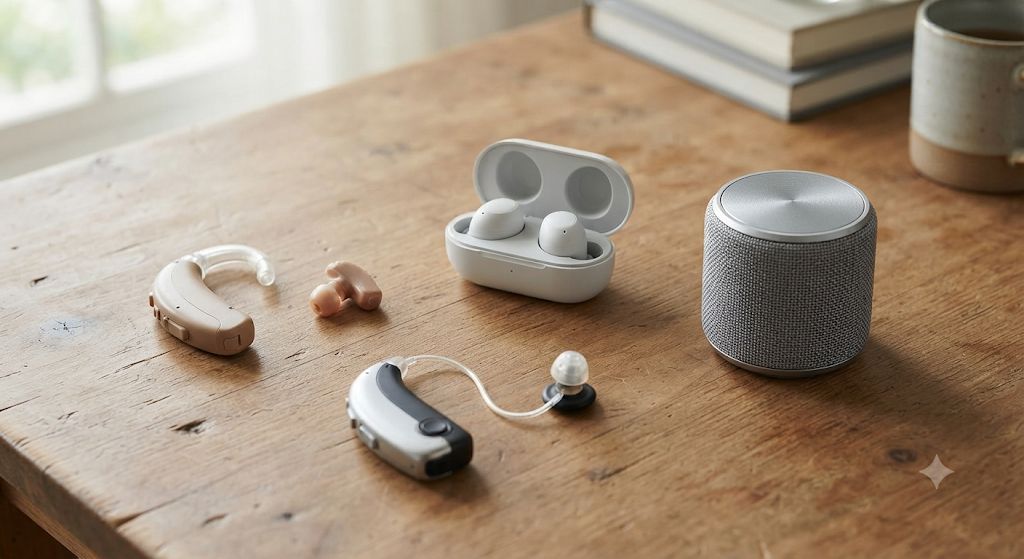
The Assistive Device Expense Subsidy Program mainly covers hearing aids for people with severe or profound hearing loss, but the actual type of hearing aid provided depends on factors such as your hearing level, the condition of your ears, and whether the hearing aid is medically necessary.
Not every hearing aid can be freely selected under the program.
Hearing Aids for Severe or Profound Hearing Loss
The program mainly covers hearing aids intended for people with severe or profound hearing loss.
In practice, the specific type of hearing aid you can receive depends on your individual hearing loss and medical needs.
People with mild or moderate hearing loss generally do not qualify for the Physical Disability Certificate based on hearing impairment, which means they generally cannot use this particular subsidy program.
However, there are exceptions and other support programs offered by local governments.
Behind-the-Ear Hearing Aids
Behind-the-ear (BTE) hearing aids may be covered when they are appropriate for a person with severe or profound hearing loss.
The actual decision is based on the individual’s hearing loss and the requirements of the assistive device system.
We prepared article of BTE. So,please refer it.
In-the-Ear Hearing Aids
In-the-ear (ITE) hearing aids may also be covered when specific conditions are met.
Both ready-made and custom-made in-the-ear hearing aids may qualify when an in-the-ear design is considered necessary.
Examples of situations in which an in-the-ear hearing aid may be considered include:
- Significant deformation or loss of part of the outer ear makes a behind-the-ear hearing aid difficult to use
- Skin inflammation or another condition makes a behind-the-ear hearing aid difficult to use
- Occupational reasons make a behind-the-ear hearing aid difficult to use
- The shape of the ear makes a ready-made hearing aid unsuitable and a custom-made device is necessary
In other words, simply preferring an in-the-ear hearing aid because it is smaller or less visible does not necessarily mean that it will be covered.
We prepared article of ITE. So, please refer it.
Pocket Hearing Aids
Pocket hearing aids, also known as body-worn hearing aids, may be covered for people with severe or profound hearing loss when the requirements of the program are met.
As with other hearing aids, eligibility depends on the individual’s hearing loss and whether the device is considered appropriate and necessary.
We prepared article of pocket type hearing aids. So, please refer it.
Regarding pocket type hearing aids↗
Bone-Conduction Hearing Aids
Bone-conduction hearing aids may be covered when conventional air-conduction hearing aids are difficult or inappropriate to use and bone-conduction hearing is considered necessary.
Examples of relevant conditions include:
- Conductive hearing loss
- Significant ear discharge or conditions such as atresia of the external ear canal
- Difficulty using an ear tip or earmold
| Condition | Explanation |
| Type of hearing loss | Conductive hearing loss |
| Condition of the ear | Significant ear discharge, external ear canal atresia, etc. |
| Conventional hearing aids | Ear tips or earmolds are difficult to use |
| Bone-conduction hearing aid | May be covered when medically necessary |
We prepared article of bone-conduction hearing aids. So, please refer it.
Regarding bone-conduction hearing aids↗
Can You Receive Hearing Aids for Both Ears?
Yes. In some cases, hearing aids for both ears can be covered by the Assistive Device Expense Subsidy Program when bilateral hearing aids are considered necessary.
However, having a Physical Disability Certificate does not automatically mean that you will receive two hearing aids.
The need for bilateral hearing aids is assessed based on factors such as your hearing levels and the condition of each ear.
If you believe you need hearing aids for both ears, discuss this with your doctor and your municipality when applying.
Is the Program Different for Children and Adults?
The basic framework of the Assistive Device Expense Subsidy Program applies to both adults and children.
| Adults | Children | |
| Assistive Device Expense Subsidy Program | Yes | Yes |
| Physical Disability Certificate | Generally required | Generally required |
| Hearing aids | Covered when eligible | Covered when eligible |
| User contribution | Generally 10% | Generally 10% |
| Income-based out-of-pocket maximum | Yes | Yes |
| Replacement due to growth | — | Particularly important |
Being a child does not simply mean that hearing aids are automatically cheaper under the Assistive Device Expense Subsidy Program.
However, some local governments have additional programs that reduce or eliminate out-of-pocket costs for children.
These additional programs are separate from the national Assistive Device Expense Subsidy Program and vary depending on where you live.
What Are the Eligibility Requirements for the Hearing Aid Subsidy?
To use the Assistive Device Expense Subsidy Program, you generally need to meet the disability-related requirements, have a hearing aid recognized as necessary, and receive approval from your municipality.
The hearing aid must also fall within the applicable categories and standard amounts established by the system.
You Generally Need a Physical Disability Certificate
For people with hearing loss, having a Physical Disability Certificate for hearing impairment is generally a basic requirement.
However, as mentioned earlier, there are exceptions, such as certain people with designated intractable diseases.
A Hearing Aid Must Be Considered Necessary
A doctor must determine that a hearing aid is necessary based on your hearing condition.
This is why you will generally need to see an ear, nose and throat specialist before applying.
You Need Approval From Your Municipality
You cannot simply purchase any hearing aid and then ask the government to reimburse you.
You need to apply through your municipality and receive a subsidy decision before purchasing the hearing aid.
The Hearing Aid Must Meet the Program’s Requirements and Standard Amounts
The Japanese government sets standard amounts for different types of hearing aids.
Examples include:
| Type of hearing aid | Standard amount |
| Severe hearing loss – pocket type | ¥44,000 |
| Severe hearing loss – behind-the-ear | ¥46,400 |
| Profound hearing loss – pocket type | ¥59,000 |
| Profound hearing loss – behind-the-ear | ¥71,200 |
| In-the-ear – ready-made | ¥92,000 |
| In-the-ear – custom-made | ¥144,900 |
| Bone-conduction – pocket type | ¥74,100 |
| Bone-conduction – eyeglass type | ¥126,900 |
These amounts are the standard amounts used under the Japanese system and do not necessarily represent the retail price of the hearing aid.
The hearing aid must also meet the program’s eligibility requirements.
Can the Assistive Device Expense Subsidy Program Be Used for Hearing Aid Repairs?
Yes.
The Assistive Device Expense Subsidy Program can be used not only when purchasing a hearing aid but also for certain repairs.
If a hearing aid covered by the program breaks, the cost of eligible repairs may also receive financial assistance.
However, not every repair is automatically covered. Eligibility depends on the type of repair and the parts involved.
If your hearing aid needs repair, ask your hearing aid provider or municipality whether the repair is covered before proceeding.
How Many Years Do You Need to Use a Hearing Aid Before Replacing It?
The standard service life of a hearing aid under the Japanese assistive device system is generally five years.
However, this does not mean that you automatically receive a new hearing aid after five years.
The five-year period is an estimated service life based on normal use and the expected period until the assistive device becomes difficult or impossible to repair.
Whether a replacement is approved depends on factors such as the condition of the hearing aid, how it has been used, and changes in your hearing.
In some circumstances, a replacement may also be approved before five years have passed, such as when the device becomes irreparably damaged or other circumstances justify replacement.
How to Get a Hearing Aid Through the Subsidy Program
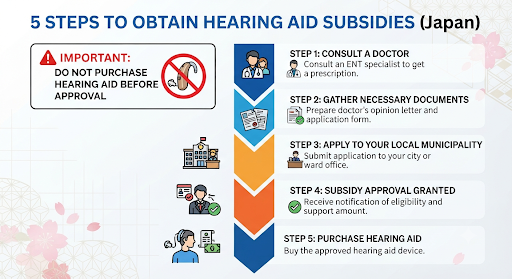
If you want to use the Assistive Device Expense Subsidy Program, the most important thing is to talk to your municipality before buying a hearing aid.
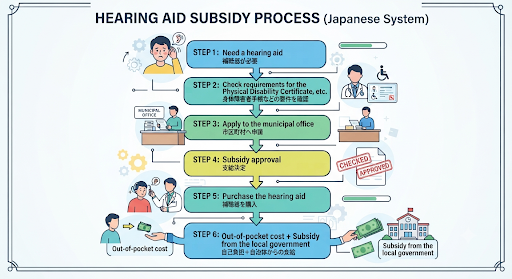
The general process is:
Contact your municipality → See a doctor and prepare the required documents → Apply → Assessment/review → Subsidy approval → Purchase the hearing aid
① Contact Your Municipality
The application is generally handled by your municipality.
Start by contacting the local government office responsible for disability welfare services.
The basic program is based on national legislation, but the exact application procedure, required documents, and assessment process can differ between municipalities.
② See a Doctor and Prepare a Medical Opinion
Because the hearing aid must be considered necessary, you will generally need to see an ear, nose and throat specialist.
The doctor may need to prepare a medical opinion or other required documentation.
③ Apply for the Assistive Device Subsidy
Once you have the required medical documentation, submit your application to your municipality.
Your municipality will tell you which forms and documents are required.
④ Undergo an Assessment or Review
The municipality will review your application and medical documentation.
Depending on your circumstances, an assessment by a designated medical or welfare authority may also be required.
⑤ Receive the Subsidy Decision
If your application is approved, your municipality will issue a decision authorizing the provision of the assistive device.
Only after receiving this approval should you proceed with purchasing the hearing aid.
⑥ Have the Hearing Aid Made or Purchased
Once approval has been received, you can proceed with an authorized hearing aid provider.
The hearing aid will be selected and fitted according to the requirements of the subsidy program.
⑦ The Subsidy Is Paid
The exact payment process depends on the municipality.
With proxy payment (代理受領), the user pays their required out-of-pocket amount to the hearing aid provider, while the provider claims the remaining subsidized amount from the municipality.
With reimbursement (償還払い), the user initially pays the full amount and then submits the required documents to the municipality to receive the reimbursed amount.
Because procedures vary between municipalities, confirm the payment method before purchasing your hearing aid.
What Documents Do You Need to Apply?
The documents required for an application generally include a Physical Disability Certificate, an application form, a medical opinion, and a quotation from a hearing aid provider.
However, the exact requirements can vary between municipalities.
Always check with your local government before submitting your application.
Physical Disability Certificate
For people applying based on hearing impairment, a Physical Disability Certificate (身体障害者手帳) is generally required.
Application Form
You will need an application form for the Assistive Device Expense Subsidy Program.
This form can generally be obtained from your municipality.
Medical Opinion or Prescription
A doctor needs to confirm that a hearing aid is necessary.
You will generally need to visit an appropriate medical institution, such as an ear, nose and throat clinic, to obtain the required documentation.
Hearing Aid Quotation
You will generally need a quotation for the hearing aid you plan to receive.
This is usually prepared by the hearing aid provider.
Other Documents Required by Your Municipality
Your municipality may ask for additional documents.
Because the exact requirements can vary, contact the disability welfare department of your municipality before applying.
Important Things to Know Before Using the Hearing Aid Subsidy
The most important thing to remember is:
Do not buy your hearing aid before receiving the subsidy decision.
Not every hearing aid qualifies, and the application process and required documents can differ depending on your municipality.
Always contact your local government before purchasing a hearing aid.
Do Not Buy the Hearing Aid First
Under the Assistive Device Expense Subsidy Program, you are generally required to apply to your municipality before purchasing the assistive device.
If you purchase a hearing aid before receiving approval, you may not be able to receive the subsidy afterward.
Do not assume that you can buy a hearing aid first and apply for reimbursement later.
Not Every Hearing Aid Is Covered
The program does not cover every hearing aid on the market.
The hearing aid must meet the requirements of the Japanese assistive device system.
Make sure you confirm whether the hearing aid you want is eligible before purchasing it.
Do Not Purchase Before the Subsidy Is Approved
Wait until the assessment has been completed and your municipality has officially approved the subsidy.
Once you receive the approval, you can proceed with the hearing aid provider.
Procedures May Differ Between Municipalities
The Assistive Device Expense Subsidy Program is based on Japanese national legislation, but some parts of the application process may differ between municipalities.
For example, the required documents, where you need to go, and how the assessment is carried out may vary.
You may find information online that does not exactly match the procedure in your area.
When you are actually applying, always confirm the current requirements with your municipality.
How Is the Subsidy Program Different From Buying a Hearing Aid Normally?
Using the Assistive Device Expense Subsidy Program requires additional procedures, such as applying to your municipality and undergoing an assessment.
However, if you qualify, the program can significantly reduce the amount you need to pay yourself.
With a normal purchase, there are fewer administrative procedures, but you generally have to pay the full retail price of the hearing aid yourself.
| Comparison | Assistive Device Subsidy | Regular Purchase |
| Physical Disability Certificate | Generally required | Not required |
| Application to municipality | Required | Not required |
| Out-of-pocket cost | Generally 10%, subject to rules | Generally full price |
| Choice of hearing aid | Subject to program requirements | Relatively flexible |
| Time until purchase | More procedures requiredUsually faster | Usually faster |
Frequently Asked Questions About Hearing Aid Subsidies in Japan
People often have questions such as:
“Can I receive a hearing aid subsidy without a Physical Disability Certificate?”
“Can I receive two hearing aids?”
“How often can I replace my hearing aids?”
“Can older adults or children use the program?”
Here are some common questions about Japan’s hearing aid subsidy system.
Can I Receive a Hearing Aid Subsidy Without a Physical Disability Certificate?
For hearing loss, a Physical Disability Certificate is generally required when receiving a hearing aid through the Assistive Device Expense Subsidy Program.
However, there are exceptions, including certain people with designated intractable diseases who may qualify without a Physical Disability Certificate.
In addition, some municipalities have their own hearing aid subsidy programs that do not require a Physical Disability Certificate.
Can I Get a Hearing Aid for Free?
In some cases, your out-of-pocket cost may be reduced to zero depending on your income and the specific support programs available.
Some local government programs may also provide additional assistance.
However, you should not assume that a hearing aid will automatically be free.
Check with your municipality to find out which programs you qualify for.
Can I Receive Hearing Aids for Both Ears?
Yes, it may be possible to receive hearing aids for both ears if bilateral hearing aids are considered necessary and you meet the program requirements.
However, having a Physical Disability Certificate does not automatically mean that two hearing aids will be provided.
Can the Program Be Used for Hearing Aid Repairs?
Yes.
Eligible hearing aid repairs can also be covered by the Assistive Device Expense Subsidy Program.
However, whether a specific repair is covered depends on the type of repair and the parts involved.
How Often Can I Replace My Hearing Aid?
The standard service life of a hearing aid under the Japanese assistive device system is generally five years.
However, this does not mean that you automatically receive a new hearing aid after five years.
Replacement is assessed based on factors such as the condition of the device, how it has been used, and changes in hearing.
In some circumstances, replacement may be approved before five years have passed.
Can I Apply After Buying a Hearing Aid?
Generally, no.
You should apply before purchasing your hearing aid and wait until the subsidy has been approved.
Do not purchase the hearing aid first and expect to receive the subsidy afterward.
Can Older Adults Use the Assistive Device Expense Subsidy Program?
Yes.
Age itself does not prevent someone from using the program.
If you meet the eligibility requirements, you may be able to use the program regardless of your age.
Can Children Use the Program?
Yes.
Children can also use the Assistive Device Expense Subsidy Program if they meet the requirements.
Children may also be eligible for additional hearing aid assistance provided by their local government.
Is This Different From Local Government Hearing Aid Subsidies?
Yes.
The Assistive Device Expense Subsidy Program is different from hearing aid assistance programs created independently by individual municipalities.
Local government programs may have different eligibility requirements and, in some cases, may not require a Physical Disability Certificate.
The availability and conditions of these programs vary significantly depending on where you live in Japan.
There Are Other Hearing Aid Assistance Programs in Japan
The Assistive Device Expense Subsidy Program is not the only form of financial assistance available for hearing aids in Japan.
Some municipalities have their own hearing aid subsidy programs for people with mild or moderate hearing loss who do not qualify for a Physical Disability Certificate.
There are also local programs specifically designed to support children who need hearing aids.
Even if you are not eligible for the national assistive device program, it is worth checking whether your municipality offers another form of assistance.
Local Government Hearing Aid Subsidy Programs
The Assistive Device Expense Subsidy Program is based on national legislation.
In addition, your municipality may have its own hearing aid assistance program.
These programs are operated by individual local governments, so the eligibility requirements and amount of financial assistance can vary considerably.
Some municipalities may not have such a program at all.
If you are choosing where to live in Japan, it may even be worth checking what types of disability and hearing aid support are available in each municipality before moving.
Subsidies for People With Mild or Moderate Hearing Loss
The national Assistive Device Expense Subsidy Program mainly covers people who meet the requirements for a hearing-related disability.
However, some municipalities provide financial assistance to people with mild or moderate hearing loss who do not qualify for a Physical Disability Certificate.
These programs are local initiatives, so they are not available everywhere in Japan.
Hearing Aid Assistance for Children
Some municipalities have additional programs to help children obtain hearing aids.
These may be provided as part of local child welfare or child-rearing support programs.
Again, these programs are operated independently by individual municipalities, so the requirements vary and not every municipality offers them.
How Are These Programs Different From the Assistive Device Expense Subsidy Program?
The main difference is that these additional programs are established independently by individual local governments.
As a result:
- Eligibility requirements vary
- The amount of assistance varies
- Some programs are limited to certain age groups
- Some programs cover mild or moderate hearing loss
- Some programs may not exist in your municipality
If you are looking for financial assistance for a hearing aid, contact your local government and ask about all available hearing aid subsidy programs, not just the national Assistive Device Expense Subsidy Program.
5 Things to Check Before Buying a Hearing Aid With the Subsidy Program
Before buying a hearing aid, check whether you have a Physical Disability Certificate, whether you qualify for the program, what documents you need, and whether you have contacted your municipality.
Most importantly, do not purchase the hearing aid before receiving the subsidy decision.
Use this checklist before making a purchase:
- □ Do I have a Physical Disability Certificate?
- □ Am I eligible for the Assistive Device Expense Subsidy Program?
- □ Have I contacted my municipality?
- □ Have I confirmed which documents I need?
- □ Have I avoided purchasing a hearing aid before receiving approval?
If you can answer these five questions before purchasing your hearing aid, you can reduce the risk of making a costly mistake.
Summary: Contact Your Municipality Before Buying a Hearing Aid
If you are considering buying a hearing aid in Japan, it is important to check whether you are eligible for any financial assistance before making a purchase.
Japan’s Assistive Device Expense Subsidy Program provides financial assistance for hearing aids and repairs for people with qualifying hearing disabilities and other eligible conditions.
For many users, the standard out-of-pocket contribution is 10%, but there are several important conditions, including income-based limits and standard amounts for different types of hearing aids.
Also, not every hearing aid is automatically covered.
Behind-the-ear and pocket hearing aids may be covered, while in-the-ear and bone-conduction hearing aids may also be covered when they are considered necessary and meet the requirements of the system.
The most important thing to remember is:
Do not buy your hearing aid before receiving approval.
The basic process is:
Contact your municipality → Prepare the required documents → Apply → Assessment/review → Receive approval → Purchase the hearing aid
If you need a hearing aid but are worried about the cost, start by contacting the disability welfare department of your municipality.
Even if you do not qualify for a Physical Disability Certificate, you may still be eligible for a separate hearing aid subsidy provided by your local government.
Before buying a hearing aid, check what financial assistance is available in your area and make sure you understand the requirements.
This can help you avoid paying more than necessary and make the process of getting a hearing aid much easier.
We prepared article of hearing loss also. If you don’t know hearing loss clearly, please refer it.
コメント