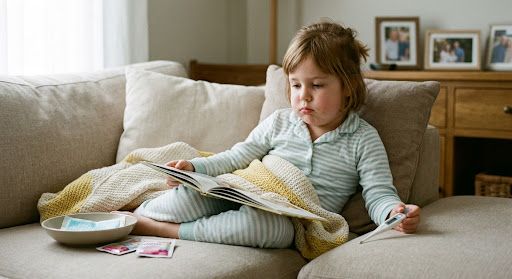
When I was a child, my parents often told me that it was better to catch mumps early in life. Perhaps some of you grew up hearing the same thing.
However, mumps can cause a serious complication called mumps-related hearing loss. It is estimated to affect around 1 in every several hundred to 1,000 people who get mumps. In most cases, the hearing loss affects just one ear, and the damage can be severe and permanent.
The good news is that vaccination can help prevent mumps and reduce the risk of this complication. In 2026, Japan also made significant progress toward introducing routine mumps vaccination as part of its national immunization program.
In this article, I’ll explain the basics of mumps-related hearing loss, how to recognize possible signs in children, and how to prevent it. I’ll also cover the latest developments in Japan as of October 2026, including vaccination schedules, costs, possible side effects, and the new MMR vaccine.
What You’ll Learn
- What mumps-related hearing loss is and how often it occurs
- How to recognize signs of hearing loss in one ear in young children
- When children should receive the mumps vaccine in Japan, how much it costs, and what side effects to know about
- The latest developments in Japan in 2026, including plans for routine vaccination and the MMR vaccine
- What Is Mumps-Related Hearing Loss?
- What Are the Characteristics of Mumps-Related Hearing Loss?
- Why Hearing Loss in One Ear Can Be Hard to Notice in Children
- Treatment and the Chances of Recovery
- Supporting Children with Hearing Loss in One Ear at Home and at School
- Vaccination Is the Main Way to Prevent Mumps-Related Hearing Loss
- Mumps Vaccination in Japan: Routine Vaccination and the New MMR Vaccine
- Parents Should Check Their Own Mumps Vaccination History, Too
- Frequently Asked Questions About Mumps and Hearing Loss
- Summary: Protect Your Child’s Hearing by Preventing Mumps
- References
What Is Mumps-Related Hearing Loss?
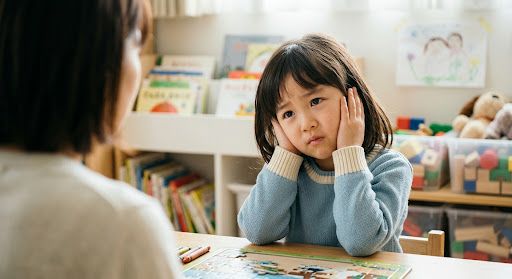
Mumps-related hearing loss is a type of hearing loss that can occur when the mumps virus damages the inner ear, the part of the ear responsible for converting sound into signals that the brain can understand.
What Is Mumps?
Mumps is a contagious illness caused by the mumps virus. In Japan, it is commonly known as otafukukaze, and its medical name is epidemic parotitis.
Here are some basic facts about mumps:
- It can spread through respiratory droplets, such as those released when an infected person coughs or sneezes, as well as through contact with contaminated hands.
- One of its most recognizable symptoms is painful swelling of the salivary glands just below the ears.
- Fever is also common.
- Some people become infected without developing obvious symptoms.
Most people recover naturally within one to two weeks.
I actually had mumps in the upper grades of elementary school, even though I had been vaccinated. I still remember how miserable I felt!
Although most people recover without serious problems, mumps can sometimes cause complications. One of these is mumps-related hearing loss.
How Common Is Mumps-Related Hearing Loss?
Mumps-related hearing loss is estimated to occur in approximately one out of every several hundred to 1,000 people who develop mumps.
A study using Japanese health insurance data examined approximately 68,000 people diagnosed with mumps. Among them, 102 developed mumps-related hearing loss. That works out to roughly one in every 668 people with mumps.
A nationwide survey conducted by the Japan Otological Society and related Japanese otolaryngology researchers also reported at least 348 cases of mumps-related hearing loss over the two-year period from 2015 to 2016.
These numbers may make the complication seem relatively rare. However, mumps outbreaks occur periodically in Japan, sometimes affecting large numbers of people. During an outbreak, many children may be exposed to the virus, which means the total number of children who develop hearing loss can increase significantly.
Even though the risk for an individual child is relatively low, mumps-related hearing loss is an important complication for parents to understand because the damage can be permanent.
What Are the Characteristics of Mumps-Related Hearing Loss?
It Usually Affects One Ear, and the Hearing Loss Can Be Severe
Mumps-related hearing loss usually affects only one ear.
In a nationwide survey conducted in Japan, 95.5% of the reported cases resulted in hearing loss in one ear, while 4.5% affected both ears.
The survey also found that approximately 80% of those affected were left with severe or profound hearing loss. This means that hearing can be greatly reduced, making it difficult to understand speech even when someone is speaking nearby.
When hearing loss affects only one ear, children may experience difficulties such as:
- Having trouble figuring out where sounds are coming from
- Struggling to follow conversations in noisy places
- Not noticing when someone speaks to them from their poorer-hearing side
Hearing loss that affects only one ear is called unilateral hearing loss.
Although a child may still hear well with their other ear, this does not mean that hearing in one ear is unimportant. It can affect communication, listening in classrooms, and awareness of sounds in the surrounding environment.
For more information, see our article about “Unilateral Hearing Loss: Causes, Symptoms, Treatment, and Ways to Improve Hearing in One Ear (2026 Guide)“, which explains its causes, symptoms, and ways to improve hearing in everyday life.
Dizziness and Ringing in the Ears Can Also Occur
Mumps-related hearing loss can sometimes occur alongside other symptoms, including dizziness and tinnitus.
Tinnitus is the perception of sounds, such as ringing or buzzing, when there is no corresponding external sound.
In the Japanese nationwide survey, approximately 40% of affected individuals experienced dizziness, and around 40% reported tinnitus.
These symptoms do not occur in every case, but they are important to recognize, especially if they appear alongside a sudden change in hearing.
Mumps-Related Hearing Loss Can Affect Both Ears
Although less common, mumps-related hearing loss can affect both ears.
When both ears are affected, the impact on everyday life can be much greater. Children may have considerable difficulty understanding speech, communicating with others, and following lessons at school.
Depending on the severity of the hearing loss, hearing aids or cochlear implants may be considered.
A cochlear implant is an electronic device that helps provide a sense of sound by directly stimulating the auditory nerve. Unlike a conventional hearing aid, which amplifies sound, a cochlear implant works by bypassing damaged parts of the inner ear.
The most appropriate option depends on the individual’s hearing and medical circumstances, so assessment by an ear, nose, and throat (ENT) specialist is important.
Why Hearing Loss in One Ear Can Be Hard to Notice in Children
Hearing loss in one ear can be difficult to recognize because the child can still hear with their other ear. As a result, parents and other adults may not notice the problem right away.
Young children may also find it difficult to explain that they cannot hear well, especially if they have not yet developed the language to describe what they are experiencing.
After your child has had mumps, keep an eye out for the following signs:
- Your child responds slowly or does not turn around when you call them from one particular side.
- Your child consistently holds a phone or a sound-making toy to the same ear.
- Your child wants the TV volume turned up or sits unusually close to the screen.
- Your child seems unsteady on their feet or complains of dizziness.
- Your child says things like “My ear feels funny” or “I hear a buzzing sound.”
It is also important to know that mumps-related hearing loss can sometimes occur even when the typical swelling below the ears is not obvious.
In other words, the absence of noticeable mumps symptoms does not necessarily mean that hearing loss cannot occur.
When Should You Seek Medical Care?
If you notice any of the signs listed above, arrange an appointment with an ear, nose, and throat (ENT) specialist as soon as possible.
You do not need to wait until after a confirmed case of mumps to seek advice. If you are concerned about your child’s hearing for any reason, it is worth getting it checked.
When you visit the doctor, it can be helpful to explain:
- When your child had mumps, if applicable
- When you first noticed a change in their behavior or hearing
- Whether the symptoms appeared suddenly or gradually
- Whether your child has experienced dizziness, ringing in the ears, or other symptoms
These details can help the doctor assess your child’s condition and decide which hearing tests may be needed.
Treatment and the Chances of Recovery
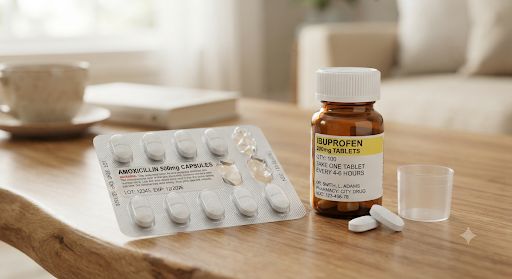
Unfortunately, there is currently no established treatment that reliably restores hearing lost because of mumps.
Doctors may try treatments such as corticosteroids, which are also sometimes used for other conditions involving sudden hearing loss. However, the effectiveness of these treatments for mumps-related hearing loss is limited, and recovery is often difficult because the infection can cause serious damage to the inner ear.
In many cases, the hearing loss is permanent.
This is why preventing mumps is especially important. Rather than relying on treatment after an infection occurs, vaccination can help reduce the risk of mumps and its potentially serious complications.
To learn more about the sensory cells involved in hearing, see our article: “What Are Hair Cells in the Ear? Why Does Damage Cause Hearing Loss?“.
Supporting Children with Hearing Loss in One Ear at Home and at School
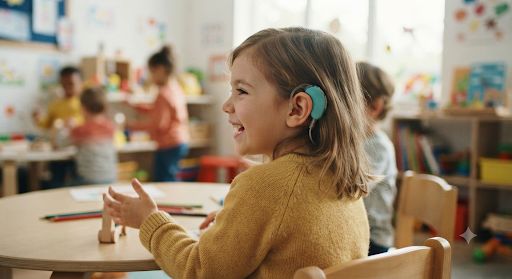
Even if your child develops hearing loss in one ear, a few simple adjustments can make everyday life much easier.
Here are some practical ways to support your child at home, at school, and in other daily situations.
- Where to stand when speaking: Whenever possible, speak to your child from their better-hearing side. Let family members know about this so everyone can help.
- Working with teachers: Talk to your child’s teacher or school staff about seating arrangements. Sitting with their better-hearing ear closer to the teacher may help your child follow lessons more easily.
- In noisy environments: Have important conversations in quieter places. Facing your child and making sure they can see your face can also help them understand what you are saying.
- Staying safe: Children with hearing loss in one ear may have difficulty noticing vehicles or bicycles approaching from their poorer-hearing side. Help your child develop the habit of checking their surroundings carefully, especially when crossing roads.
Devices That Can Help with Hearing
One option for some people with hearing loss in one ear is a CROS hearing aid system.
CROS stands for contralateral routing of signal. This system picks up sounds from the poorer-hearing side and sends them to the better-hearing ear. It can help people notice sounds coming from their poorer-hearing side, although it does not restore normal hearing in that ear or fully restore the ability to tell where sounds are coming from.
The best option depends on the individual’s hearing and medical condition. An ENT specialist or hearing care professional can help you explore suitable options.
You may also find these articles helpful:
“What Are Hearing Aids? A Complete Beginner’s Guide to Types, Costs, and How to Choose the Right One“↗
“What Is a Cochlear Implant? Eligibility, Surgery Costs, and How It Sounds Explained“↗
Vaccination Is the Main Way to Prevent Mumps-Related Hearing Loss
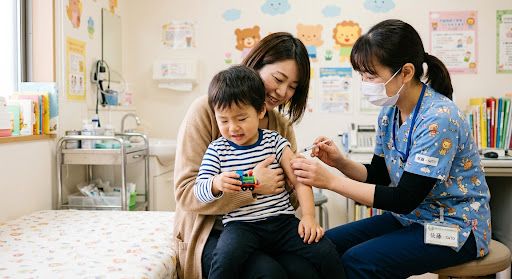
The most effective way to reduce the risk of mumps-related hearing loss is to prevent mumps itself through vaccination.
Mumps vaccination helps protect children against the infection and, as a result, reduces their risk of developing serious complications, including potentially permanent hearing loss.
When Should Children Receive the Mumps Vaccine in Japan?
In Japan, two doses of the mumps vaccine are recommended.
The usual schedule is:
| Recommended timing in Japan | |
| First dose | As soon as possible after the child’s first birthday |
| Second dose | During the school year before entering elementary school, usually at around age 5–6 |
The second dose is typically given during the year before a child starts elementary school.
This timing is convenient because it coincides with the routine vaccination period for the MR vaccine, which protects against measles and rubella. The vaccines can be scheduled together, helping parents plan their child’s immunizations more easily. The mumps vaccine can also be administered at the same visit as other eligible vaccines, according to medical advice.
Please note: This is the recommended schedule in Japan. Vaccination schedules and public funding arrangements differ between countries, so parents living elsewhere should follow the recommendations of their local health authorities.
How Much Does the Mumps Vaccine Cost in Japan?
As of October 2026, the mumps vaccine in Japan is still classified as a voluntary vaccination rather than part of the national routine immunization program.
This means that, in general, families pay for the vaccine themselves. The cost is typically around ¥5,000 per dose, although the actual price varies by medical institution.
Some local governments in Japan provide financial assistance to help cover part of the cost.
If you live in Japan, check your city or town’s official website for information about mumps vaccination subsidies. You can search for terms such as otafukukaze yobō sesshu josei (financial assistance for mumps vaccination).
If you live outside Japan, check with your local health department or pediatrician to find out whether the vaccine is included in your country’s routine immunization program.
What Side Effects Can the Mumps Vaccine Cause?
The mumps vaccine is a live attenuated vaccine, meaning it contains a weakened form of the virus that stimulates the immune system.
Some children may develop mild swelling around the salivary glands below the ears or a fever after vaccination.
A rare but important possible side effect is aseptic meningitis, an inflammation of the membranes surrounding the brain and spinal cord that is not caused by bacteria.
A large-scale study in Japan reported approximately 9–13 cases of aseptic meningitis per 100,000 doses of the mumps vaccine.
By comparison, aseptic meningitis has been reported in approximately 1–10% of people who develop mumps naturally. This illustrates that the risk is considerably lower following vaccination than following a natural infection, although vaccine-associated cases can still occur.
It is also important to understand that vaccination does not guarantee complete protection. Some vaccinated children may still develop mumps, but vaccination helps reduce the risk of infection and its complications.
If you have concerns about vaccine safety or your child’s medical history, talk to your pediatrician before vaccination.
Mumps Vaccination in Japan: Routine Vaccination and the New MMR Vaccine
In 2026, there were important developments in Japan regarding mumps vaccination.
Two key topics are the approval of a new MMR vaccine and ongoing discussions about including mumps vaccination in Japan’s national routine immunization program.
Japan Approves the MMR Vaccine “Mimlit”
On May 11, 2026, Japan approved a vaccine called Mimlit, which protects against three diseases with a single injection: measles, mumps, and rubella. This combination is known as the MMR vaccine.
Japan previously used an MMR vaccine, but its use was discontinued in 1993 because of concerns about adverse reactions, particularly aseptic meningitis associated with the mumps vaccine component.
The newly approved vaccine uses a mumps virus strain that has been widely used overseas. In Japanese clinical trials, no cases of aseptic meningitis were observed following vaccination.
However, the absence of cases in clinical trials does not mean that the risk is necessarily zero.
The vaccine’s availability, launch date, cost, and participating medical institutions may vary. If you live in Japan, check with your child’s pediatrician for the latest information.
When Will Mumps Vaccination Become Part of Japan’s Routine Immunization Program?
On September 30, 2026, a subcommittee of Japanese government experts concluded that there were no major concerns about introducing mumps vaccination into Japan’s routine immunization program.
Both the existing standalone mumps vaccine and the new MMR vaccine were considered in the discussions.
The proposed vaccination schedule includes:
- First dose: At around age 1
- Second dose: During the year before entering elementary school, usually at age 5–6
- Catch-up vaccination: For eligible preschool-aged children who missed the opportunity to receive the first dose at age 1 and have never been vaccinated
However, as of October 2026, a final decision to introduce routine mumps vaccination had not yet been made.
Reports indicated that Japan was working toward introducing the program in fiscal year 2027, which runs from April 2027 through March 2028. The official start date will depend on future government announcements.
For families in Japan, it is important to distinguish between a proposed schedule and a vaccination program that has officially started.
Should You Wait for Routine Vaccination to Begin?
Some parents may wonder whether they should wait until mumps vaccination becomes part of Japan’s routine immunization program.
Mumps outbreaks occur periodically, and it is difficult to predict when the next one will happen.
If your child is at least 1 year old and has not received the mumps vaccine, it is worth discussing vaccination with your pediatrician rather than waiting solely for the planned policy change.
Your doctor can help you decide what is appropriate for your child based on their age, vaccination history, and medical circumstances.
For the latest updates on Japan’s vaccination policy, check the official website of the Ministry of Health, Labour and Welfare (MHLW) or your local municipal government.
Parents Should Check Their Own Mumps Vaccination History, Too
Mumps-related hearing loss does not affect only children. Adults can also develop the complication.
A nationwide survey in Japan found that, in addition to children, adults in their child-rearing years were among the groups affected by mumps-related hearing loss.
Parents may also be exposed to the virus through their children, so it is worth checking your own vaccination history.
Here are three steps you can take:
- Check your vaccination records: If you have your childhood vaccination records, review them to see whether you received the mumps vaccine or had mumps in the past.
- Consult a healthcare professional if your history is unclear: If you cannot remember whether you had mumps or received the vaccine, a doctor can help you decide what to do. A blood test may also be used to check for antibodies against the virus.
- Consider vaccination as an adult: Adults can also receive the mumps vaccine as a voluntary vaccination in Japan. Ask your doctor whether it is appropriate for you.
Important Information for People Who Are Pregnant or Planning a Pregnancy
The mumps vaccine is a live attenuated vaccine, so it should not be given during pregnancy.
People who are planning a pregnancy should also follow their healthcare professional’s advice about how long to wait before trying to conceive after vaccination.
If you are pregnant, planning a pregnancy, or unsure whether vaccination is appropriate for you, speak with your doctor before making a decision.
Checking your vaccination history now can help you make informed decisions about protecting both yourself and your family.
Frequently Asked Questions About Mumps and Hearing Loss
If My Child Has Had Mumps Once, Are They Protected for Life?
In most cases, getting mumps provides immunity against future infections. However, it is possible to mistake another illness for mumps.
If you are unsure whether your child actually had mumps, or if their medical history is unclear, consult your pediatrician for advice.
Can the Mumps Vaccine Completely Prevent Mumps-Related Hearing Loss?
No vaccine provides 100% protection.
However, mumps vaccination significantly reduces the risk of developing mumps. By helping prevent the infection itself, vaccination also reduces the risk of complications, including potentially permanent hearing loss.
Can the Mumps Vaccine Be Given at the Same Time as Other Vaccines?
Yes. In Japan, the mumps vaccine can be administered at the same visit as other eligible vaccines, such as the MR vaccine, which protects against measles and rubella, and the chickenpox vaccine.
Available evidence has not shown that giving these vaccines at the same visit reduces their effectiveness or increases the risk of adverse reactions overall.
Your child’s pediatrician can advise you on the appropriate vaccination schedule.
Please note that vaccination schedules and recommendations may differ by country.
Should I Wait Until Mumps Vaccination Becomes Routine in Japan?
As of October 2026, the official start date for routine mumps vaccination in Japan has not yet been finalized.
Mumps outbreaks can occur while families are waiting for a policy change, so parents of eligible children may wish to discuss vaccination with their pediatrician rather than delay it solely in anticipation of the new program.
For the latest information, check announcements from Japan’s Ministry of Health, Labour and Welfare or your local municipal government.
Can Mumps-Related Hearing Loss Be Cured?
Unfortunately, there is currently no established treatment that reliably restores hearing lost because of mumps.
Some treatments may be attempted, but hearing loss can be permanent, especially when the damage to the inner ear is severe.
This is why preventing mumps through vaccination is so important.
Summary: Protect Your Child’s Hearing by Preventing Mumps
Here are the key points to remember:
- Mumps-related hearing loss is an uncommon but serious complication, estimated to occur in approximately one out of every several hundred to 1,000 people who develop mumps.
- It usually affects one ear, and the hearing loss can be severe and permanent.
- Hearing loss in one ear can be difficult to notice, so pay attention to changes in your child’s behavior, especially after a mumps infection.
- Vaccination helps prevent mumps and reduces the risk of complications. In Japan, two doses are recommended: the first at around age 1 and the second during the year before entering elementary school.
- In 2026, Japan approved a new MMR vaccine and made progress toward introducing routine mumps vaccination. However, the official start date had not yet been finalized as of October 2026.
When I was growing up, people often said it was better to catch mumps early in life. Today, we have a better way to protect children: vaccination.
If you are a parent, a good first step is to check your child’s vaccination record and talk with your pediatrician about any doses they may need.
Taking a little time to review your child’s vaccination history can help you make informed decisions to protect their hearing and overall health.
We prepared article of “What Is Hearing Loss? Causes, Symptoms, Types, Diagnosis, and Treatment“. So, please refer it.
Learn more about hearing loss↗
References
Incidence of Mumps Deafness in Japan, 2005–2017: Analysis of Japanese Insurance Claims Database
Nationwide Survey of Hearing Loss Caused by Mumps during 2015–2016 in Japan

コメント