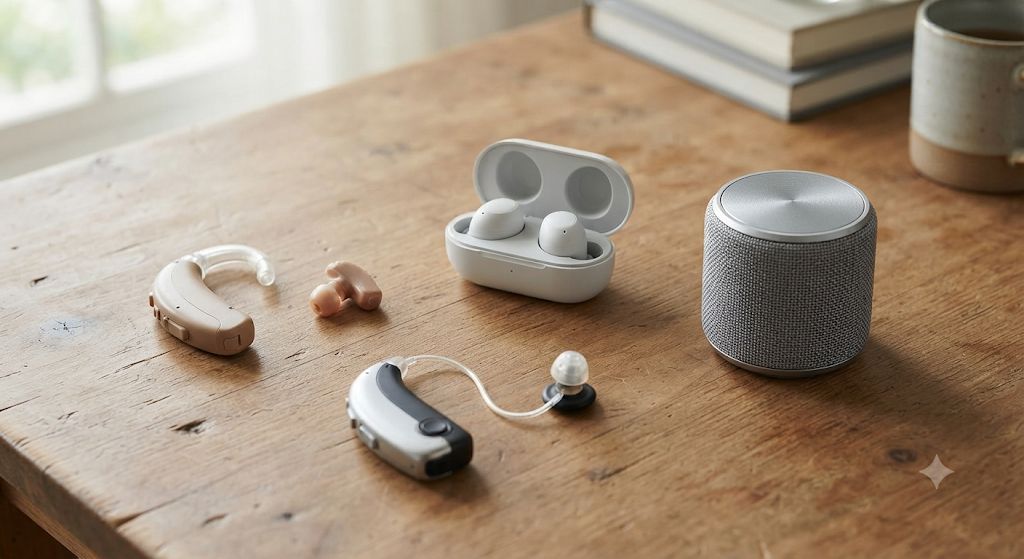
“What is a behind-the-ear hearing aid?” “How is it different from an in-the-ear hearing aid?” “What do BTE and RIC mean?” If you are new to hearing aids, you may have many questions about how they work and which type is right for you.A behind-the-ear (BTE) hearing aid is a type of hearing aid that sits behind the ear. It is one of the most common types of hearing aids and is available in models designed for a wide range of hearing loss, from mild to severe.Today’s BTE hearing aids also come in a variety of designs and features. Some models are small and discreet, while others can connect to smartphones via Bluetooth or use rechargeable batteries.However, there are several things to consider before choosing a BTE hearing aid. You may wonder how noticeable it is, whether you can wear it comfortably with glasses or a face mask, what the difference is between BTE and RIC hearing aids, and how much a hearing aid typically costs.In this guide, we explain behind-the-ear hearing aids in simple terms for people who have never used a hearing aid before, including how they work, the different types, their benefits and drawbacks, typical costs, and how to choose the right one.
Regarding Type of hearing aids↗
- What Is a Behind-the-Ear (BTE) Hearing Aid?
- Types of Behind-the-Ear Hearing Aids
- What Is an Earmold for a Behind-the-Ear Hearing Aid?
- Benefits of Behind-the-Ear Hearing Aids
- Drawbacks of Behind-the-Ear Hearing Aids
- Who Are Behind-the-Ear Hearing Aids Best For?
- Who May Not Be a Good Fit for Behind-the-Ear Hearing Aids?
- How Much Do Behind-the-Ear Hearing Aids Cost?
- Behind-the-Ear vs. In-the-Ear Hearing Aids: What’s the Difference?
- How to Choose a Behind-the-Ear Hearing Aid
- Frequently Asked Questions About Behind-the-Ear Hearing Aids
- Conclusion: Are Behind-the-Ear Hearing Aids Right for You?
What Is a Behind-the-Ear (BTE) Hearing Aid?
A behind-the-ear (BTE) hearing aid is a type of hearing aid that sits behind the ear. The main part of the device contains a microphone that picks up sounds around you, electronic components that process the sound, and a speaker that sends the amplified sound to your ear.In a traditional BTE hearing aid, a thin tube extends from the main unit and connects to an earmold, which sits in your ear.As the name suggests, a behind-the-ear hearing aid is worn behind the ear, with the main part of the device resting behind your ear.So, how does it work?The microphone picks up sounds around you. The hearing aid then processes and adjusts those sounds to make them easier to hear. The adjusted sound is sent from the speaker through the tube and into your ear.Because the microphone and speaker are separated in a BTE hearing aid, it can help reduce the risk of feedback, even when a high level of amplification is needed. This makes BTE hearing aids suitable for a wide range of hearing loss, from mild to moderate and severe hearing loss, and in some cases, profound hearing loss.
Types of Behind-the-Ear Hearing Aids
Behind-the-ear hearing aids can generally be divided into two main types: BTE (Behind-the-Ear) and RIC (Receiver-in-Canal).Both types are worn behind the ear, but they differ in where the speaker, also called the receiver, is located and how sound is delivered to the ear.Understanding the difference between these two types can make it easier to choose a hearing aid that fits your hearing needs and lifestyle.
BTE (Behind-the-Ear)
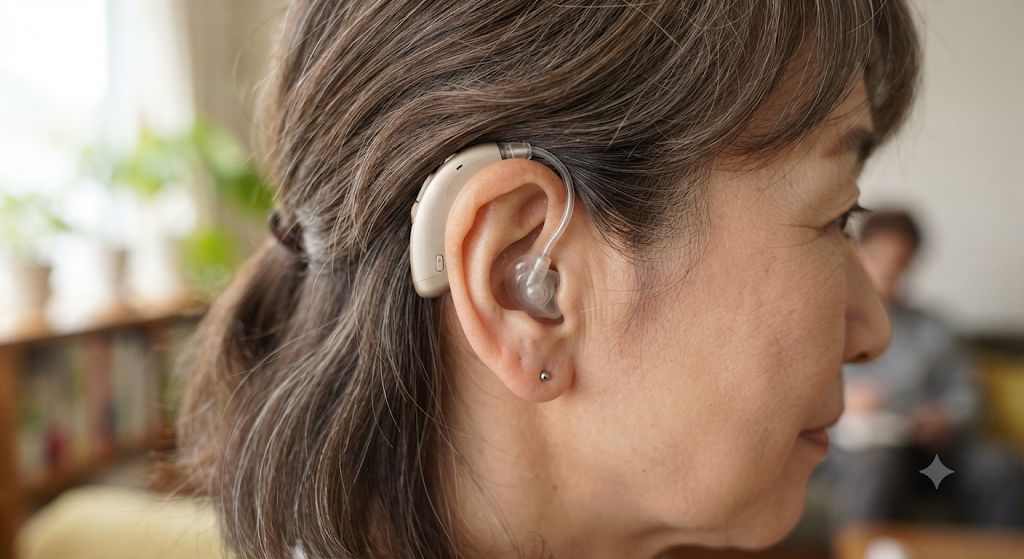
BTE stands for Behind-the-Ear. The name simply describes how the hearing aid is worn, with the main unit sitting behind the ear.BTE is the more traditional and classic style of behind-the-ear hearing aid. When many people think of a hearing aid, this is probably the type they picture.Because BTE hearing aids are a well-established design, there are many different models available, ranging from more affordable entry-level devices to advanced premium models. They also come with a wide range of features and power levels.If you are not sure which type of hearing aid to try first, a BTE model can be a good starting point because of its versatility.
RIC (Receiver-in-Canal)
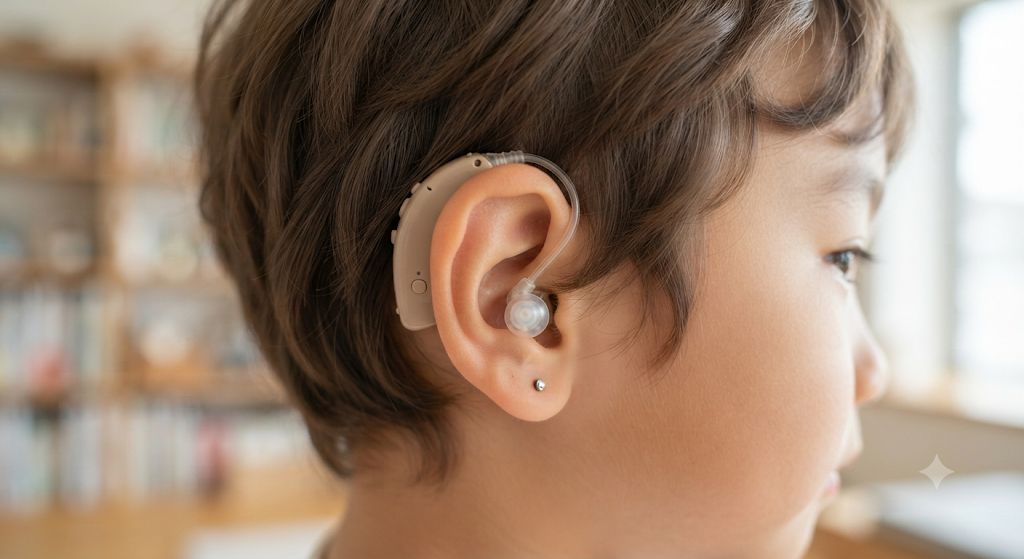
RIC stands for Receiver-in-Canal.Like a BTE hearing aid, a RIC hearing aid is worn behind the ear. However, there is one major difference: the speaker, or receiver, is placed close to or inside the ear canal rather than inside the main body of the hearing aid.The main unit behind the ear is connected to the receiver by a thin electrical wire instead of a tube.Many RIC hearing aids use a soft silicone dome, which fits into the ear canal. A dome is similar to the soft ear tip found on many earphones or earbuds.RIC hearing aids are often smaller and more discreet than traditional BTE models because the receiver is located closer to the ear.
BTE vs. RIC: What’s the Difference?
BTE and RIC hearing aids are both worn behind the ear, but the biggest difference is where the speaker (receiver) is located.With a BTE hearing aid, the speaker is part of the main body, and sound travels through a tube into the ear. With a RIC hearing aid, the receiver is placed close to or inside the ear canal and is connected to the main unit by a thin wire.This design allows RIC hearing aids to have a smaller main body, making them less noticeable when worn.
| Feature | BTE | RIC |
| Where the sound comes from | From the main unit behind the ear | From the receiver near or inside the ear canal |
| Connection to the ear | Tube | Thin electrical wire |
| What goes in the ear | Tube with an earmold or ear tip | Receiver with a dome or earmold |
| Size of the main unit | Generally larger | Usually smaller |
| Appearance | More noticeable | Generally more discreet |
| Suitable for hearing loss | A wide range, including more severe hearing loss | A wide range, including mild to severe hearing loss |
| Earmold | Commonly used | May be used, although domes are also common |
| Best suited for | People who need more power or want a more robust design | People who prefer a smaller, more discreet device and a comfortable fit |
In simple terms, you can think of them this way:BTE: The main unit → tube → earRIC: The main unit → thin wire → receiver near or inside the earNeither type is necessarily better than the other. The right choice depends on your hearing loss, ear shape, lifestyle, and the features you need.
What Is an Earmold for a Behind-the-Ear Hearing Aid?
An earmold is a custom-made earpiece that is shaped to fit the contours of your ear. It works somewhat like an earplug, but it is specifically designed to work with a hearing aid.An earmold helps deliver sound from the hearing aid into your ear while keeping the earpiece securely in place. A good fit can also help reduce sound leakage and the risk of feedback.Because hearing aids are often worn for many hours every day, comfort is important. A custom-made earmold can provide a secure and comfortable fit while helping the hearing aid deliver sound effectively.
Benefits of Behind-the-Ear Hearing Aids
Behind-the-ear hearing aids have several advantages:
- Suitable for a wide range of hearing loss
- A wide variety of features are available
- Many models support Bluetooth
- Easy to replace batteries or recharge
- Generally durable
- A wide range of adjustment options
One of the biggest advantages of behind-the-ear hearing aids is their versatility.They are available in many different designs and power levels, so they can be used by people with different levels of hearing loss. Many models also offer useful features such as Bluetooth connectivity, rechargeable batteries, noise reduction, and automatic sound adjustment.If you are new to hearing aids and are not sure where to start, the wide range of options available with BTE and RIC models can make them a good choice to consider.
Drawbacks of Behind-the-Ear Hearing Aids
Behind-the-ear hearing aids also have some disadvantages
- More noticeable than in-the-ear hearing aids
- May interfere with glasses or face masks
- Can be affected by sweat and moisture
- Fit and comfort may vary depending on your hairstyle
One of the most common concerns is that the hearing aid can be more visible than an in-the-ear hearing aid.
For people who have worn hearing aids from a young age, or who are used to seeing people with hearing aids, this may not be a major concern. However, people who start wearing hearing aids later in life may feel self-conscious about their appearance.
Face masks can also sometimes be difficult to use with behind-the-ear hearing aids. During the COVID-19 pandemic, for example, my wife sometimes accidentally pulled her hearing aids out when removing her face mask.
Behind-the-ear hearing aids can also be affected by sweat and moisture, especially during the summer. Using a hearing aid drying case or other appropriate drying equipment regularly can help protect the device from moisture.
Who Are Behind-the-Ear Hearing Aids Best For?
- People who are using a hearing aid for the first time
- People with severe hearing loss
- People who want to use Bluetooth
- People who value easy operation
- People who want a hearing aid they can use for many years
Behind-the-ear hearing aids offer a wide range of adjustment options, making them a good choice for people who are using a hearing aid for the first time. Because there are many different models and power levels available, they can be adjusted to meet a variety of hearing needs.
RIC hearing aids can provide a more natural listening experience for some users, and more powerful models are available for people with severe hearing loss. However, the most suitable hearing aid depends on your individual hearing loss and listening needs.
Hearing aids can be a significant investment, so many people want a device that will last as long as possible. My wife, for example, has used her behind-the-ear hearing aid for more than 10 years. This is one of the things we like about this type of hearing aid, although the actual lifespan can vary depending on how the device is used and maintained.
We prepared article of how to choose hearing aid. So, please refer it.
Regarding how to choose hearing aids↗
Who May Not Be a Good Fit for Behind-the-Ear Hearing Aids?
- People who want their hearing aid to be as discreet as possible
- People who prefer a very small hearing aid
Compared with in-the-ear hearing aids, behind-the-ear hearing aids can be more noticeable because part of the device sits behind the ear.
Some people are also concerned that a behind-the-ear hearing aid may get in the way when wearing glasses. However, my wife wears glasses every day and uses them together with her hearing aids without much difficulty.
It may take some time to get used to wearing both. There can be some interference when putting on or removing glasses, but if you find the combination uncomfortable even after getting used to it, an in-the-ear hearing aid may be worth considering.
How Much Do Behind-the-Ear Hearing Aids Cost?
Hearing aids are not inexpensive, and the price of a behind-the-ear hearing aid can vary considerably depending on the manufacturer, technology, and features.
In general, hearing aids can be divided into three price ranges: entry-level, standard, and premium models.
The prices below are only rough estimates. Actual prices vary depending on the manufacturer, model, and features. The prices are also shown per ear unless otherwise stated.
Entry-Level Models
Approximately $500–$1,000 per ear
Entry-level hearing aids are a good option for people who mainly need basic hearing assistance without a lot of advanced features.
Even within the entry-level range, RIC models can sometimes be slightly more expensive than traditional BTE models.
Standard Models
Approximately $1,000–$2,000 per ear
Standard models are a popular choice because they offer a good balance between price and features.
My wife uses a hearing aid in roughly this price range. These models often include useful features such as Bluetooth connectivity, along with the basic functions needed for everyday use.
Premium Models
Approximately $2,000–$4,000 per ear
Premium hearing aids offer more advanced sound-processing technology and additional features.
However, a more expensive hearing aid does not necessarily mean that it will sound better for everyone. The most important thing is to choose a hearing aid that matches your hearing loss, lifestyle, and personal preferences.
Behind-the-Ear vs. In-the-Ear Hearing Aids: What’s the Difference?
If you are choosing your first hearing aid, you may be wondering whether a behind-the-ear or an in-the-ear hearing aid is better for you.
Both types have their own advantages and disadvantages. Behind-the-ear hearing aids are generally versatile and can accommodate a wide range of hearing loss, while in-the-ear hearing aids can be smaller and less noticeable.
Here is a simple comparison of the two types:
| Feature | Behind-the-EarIn-the-Ear | In-the-Ear |
| Appearance | More visible | Generally more discreet |
| Price | Varies by model | Varies by model |
| Sound and hearing support | Suitable for a wide range of hearing loss | Depends on the model and hearing loss |
| Bluetooth | Available on many models | Available on some models |
| Suitable for hearing loss | Wide range, including more severe hearing loss | Depends on the type and size |
| Maintenance | Relatively easy to clean and maintain | Can require more care because it sits inside the ear |
| Ease of operation | Generally easy to handle | Smaller models may be more difficult to handle |
If you would like to learn more about in-the-ear hearing aids, see our detailed guide to in-the-ear hearing aids.
You can also learn more about the different types of hearing aids in our guide to hearing aid types.
Please refer article for type of hearing aids.
Regarding type of hearing aids↗
And we also prepared article of ITE. So, please refer it.
Regarding In the Ear hearing aids↗
How to Choose a Behind-the-Ear Hearing Aid
When choosing a behind-the-ear hearing aid, consider the following:
- Your degree of hearing loss
- Where and when you will use the hearing aid
- Rechargeable or disposable batteries
- Whether you need Bluetooth connectivity
- Trying the hearing aid before you buy it
The most important thing is to try the hearing aid before making a decision.
After the hearing aid has been adjusted based on your hearing test, try using it in different situations, such as having a conversation, watching TV, or going outside.
Choosing a hearing aid based only on its appearance or price can sometimes lead to an uncomfortable listening experience. For example, sounds may feel unnatural or overly loud at first.
Try different hearing aids and choose the one that feels the most comfortable and natural for you. A hearing aid that works well for one person may not necessarily be the best choice for someone else.
Frequently Asked Questions About Behind-the-Ear Hearing Aids
Are behind-the-ear hearing aids noticeable?
They are generally more noticeable than in-the-ear hearing aids because part of the device sits behind the ear. However, modern behind-the-ear hearing aids have become much smaller and more discreet than older models.
Should I wear hearing aids in both ears?
If you have hearing loss in both ears, wearing hearing aids in both ears may be recommended. However, the best option depends on your hearing loss, lifestyle, and individual needs. Talk to a hearing care professional to determine whether using one or two hearing aids is right for you.
Can I wear glasses with a behind-the-ear hearing aid?
Yes. You can wear glasses and behind-the-ear hearing aids at the same time. My wife wears both every day.
However, you may find them slightly uncomfortable when putting on or taking off your glasses, especially when you first start wearing hearing aids. Most people can get used to the combination over time.
How long do behind-the-ear hearing aids last?
Behind-the-ear hearing aids are generally expected to last around 5–7 years, although the actual lifespan can vary depending on the device, how often it is used, and how well it is maintained.
With proper care and regular maintenance, some hearing aids can continue to work well for more than seven years.
My wife has been using her current hearing aids for around 10 years. They are actually her second pair, and she used her first pair for more than 10 years as well.
This is why proper cleaning, maintenance, and moisture protection are important if you want to use your hearing aids for as long as possible.
For more information, see our guide to hearing aid maintenance and care.
Are rechargeable hearing aids better?
Rechargeable hearing aids can be a good choice if you find changing batteries inconvenient.
Traditional hearing aid batteries are small and can be difficult to handle, especially for people with limited dexterity. They can also be dangerous if accidentally swallowed, particularly by children.
However, rechargeable and replaceable-battery hearing aids both have their advantages, so the best choice depends on your lifestyle and preferences.
Conclusion: Are Behind-the-Ear Hearing Aids Right for You?
Behind-the-ear hearing aids are worn behind the ear. They pick up sounds through a microphone, process and adjust those sounds inside the hearing aid, and then deliver the sound to your ear through a tube or thin wire.
There are two main types of behind-the-ear hearing aids: traditional BTE hearing aids and RIC (Receiver-in-Canal) hearing aids. Although they have different designs, both types are available in models suitable for a wide range of hearing loss. Many modern models also offer useful features such as Bluetooth connectivity and rechargeable batteries.
Behind-the-ear hearing aids may be a good option for people who:
- Are using a hearing aid for the first time
- Want a hearing aid that can accommodate a wide range of hearing loss
- Want convenient features such as Bluetooth connectivity
- Value ease of use
- Want a hearing aid that can be used for many years
On the other hand, behind-the-ear hearing aids are generally more noticeable than in-the-ear hearing aids, and they may sometimes interfere with glasses or face masks. If keeping your hearing aid as discreet as possible is your top priority, an in-the-ear hearing aid may be worth considering.
Most importantly, choosing a hearing aid is not simply about finding the most expensive model or the most well-known brand. The right hearing aid depends on your hearing loss, lifestyle, daily listening environments, and personal preferences.
If possible, try a hearing aid before buying it and see how it feels in different situations, such as during conversations, while watching TV, and when you are outside.
If you are not sure whether a behind-the-ear or an in-the-ear hearing aid is right for you, compare the features of both types and choose the one that best fits your hearing needs and lifestyle.


コメント