
What you’ll learn
- Why older adults often say no to hearing aids
- What may be happening when a person with dementia keeps taking them out
- Gentle ways to raise the subject and ease into wearing them
- Daily support for families and care staff
- Other options when hearing aids are hard to use
- Living in Japan? A few things that work differently there
“We bought the hearing aids, but Dad never wears them.”
“Mom says she hears just fine, even though she keeps asking everyone to repeat themselves.”
If this sounds familiar, you are far from alone. Many families go through it, and it is a common worry in care homes too.
The first thing to know is that refusing hearing aids is rarely just stubbornness. There is usually a reason behind it, and once you understand the reason, it gets easier to know what to say.
This article walks through why it happens, what can be going on when someone with dementia keeps removing their hearing aids, and what families and care staff can do each day.

Why Many Older Adults Say No to Hearing Aids
Let’s start with the most common reasons.
They do not feel they have a problem
Hearing loss usually creeps in slowly. Many people adjust without noticing, and some feel that everyone else has started to mumble. Others see it as a normal part of getting older, not something worth fixing. If you do not feel you have a problem, a hearing aid is just one more thing to deal with.
Hearing aids do not bring back the hearing they used to have
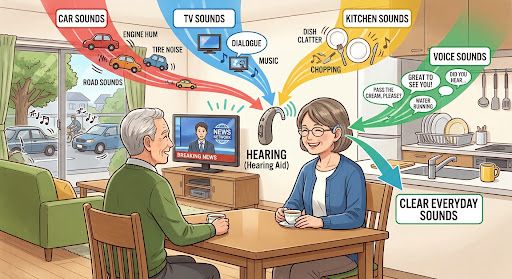
A hearing aid is not like a pair of glasses. It picks up sound with a small microphone and makes it louder, so it boosts the voice you want to hear, and also the refrigerator hum, the clatter of dishes, and the traffic outside.
Normally, our brains quietly pick out the sounds we care about and let the rest fade into the background. After years of hearing less, that filter gets out of practice. So the first days with hearing aids can feel too loud, tinny, or even more confusing than before.
Cost
Prices vary a lot by country and by type of device. In many places, insurance covers little or nothing, and a pair costs twice as much as a single hearing aid. Some older adults also feel uneasy spending that much on themselves. A few countries now sell over-the-counter hearing aids for mild to moderate hearing loss, which can be a lower-cost starting point. If you are comparing options, our beginner’s guide to choosing a hearing aid walks through what to look for.
Fit, comfort, and daily hassle
Something sitting in or behind the ear can feel odd. Tiny batteries, small buttons, sweat, and cleaning can all add up, especially for stiff or shaky fingers. None of this sounds like much, but a small daily annoyance is often the reason a hearing aid ends up in a drawer.
Not wanting to feel “old”
Research on older adults with hearing loss keeps finding that stigma plays a role. Some people worry that a hearing aid will make them look older or less capable, and that worry can shape whether they get tested, which device they pick, and where they are willing to wear it. This is more about feelings than facts, so a calm conversation usually works better than a lecture.
When the Person Has Dementia
For someone living with dementia, several things can pile up at once.
- New routines are hard to learn. Old habits often stay, but a new rhythm like “put them in each morning, take them out at night” can be difficult to pick up.
- Discomfort is hard to put into words. A person may not be able to tell you that the sound is too loud or that an ear hurts, and taking the hearing aid out may be the way they say it. Some people also dislike having their ears touched, and a short explanation, or even a mirror, can help them understand what is happening.
- Busy places can feel overwhelming. In a noisy room, amplified sound can be exhausting, and some people switch their hearing aids off or remove them.
- Keeping track of things is hard. Hearing aids get set down and lost, and batteries run out without anyone noticing.
Getting used to hearing aids takes anywhere from a few weeks to a few months, and the early period often needs some adjustments. A person with dementia may find it hard to get through that stretch alone, which is why the people around them matter so much.
Hearing loss and dementia are linked, and you can read more in our family guide to hearing loss and dementia risk. But hearing aids are not a guaranteed way to prevent dementia. Helping someone hear, and keeping them in conversation, is simply one way to support daily life.
What to Try First
1. Start with their everyday struggles, not the device
Instead of “You need to wear your hearing aids,” try asking about daily life, such as “Is the TV hard to follow lately?” Another gentle opener is “Was it easy to hear me just now?” Pointing out that they cannot hear tends to make people defensive.
2. See a hearing professional
Hearing difficulty can have different causes, and some, such as earwax, are simple to treat. A check-up with an ear doctor or audiologist is a good first step. A clinic that adjusts hearing aids carefully is worth looking for. If you are not sure whether hearing aids are needed yet, our guide on who needs hearing aids and when to get checked may help.
3. Begin with short stretches
Wearing hearing aids all day from day one is a lot. Try 30 minutes during a quiet conversation at home, then slowly add more time.
4. Ask for adjustments when sound feels wrong
If the person keeps taking them out, the sound or the fit may need changing. Please do not scold. Take them back to the clinic. Adjustments are a normal part of the process, and you can ask for as many as it takes.
5. Smile, and talk face to face
People with dementia can read a neutral face as an angry one. Speak calmly, from a spot where they can see you, slowly and kindly. For more tips, see our guide on how to talk to an older person with hearing loss.
Phrases like “Come on, try harder!” can make a person feel even less confident. Not blaming them for what has become difficult is the most important rule.
Daily Support at Home
- Build it into the morning. Putting them in at the same point each day, say after getting dressed, makes a habit easier to form.
- Check the battery every day. A hearing aid with a dead battery can look like it is working. Rechargeable models can save fiddling with tiny batteries.
- Choose one home for them. Use the same case or box every time they come out, so they do not get lost.
- Clean them together. Earwax and dirt can muffle the sound. Use the cleaning method the clinic showed you.
- Whistling usually means a fit problem. If you hear squealing, check whether the hearing aid has slipped out of position.
For Care Home and Care Staff
In care settings, many people share the work, so routines can easily drift apart. A few shared habits help.
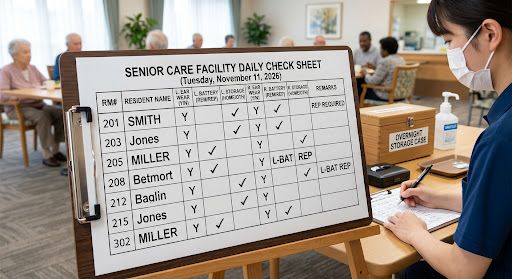
- Gather the basics at admission. Type of device, which ear, battery type, usual wearing hours, and the signs they want it off, such as tugging at the ear. Ask the family or the clinic.
- Use one routine for everyone. Agree on how they go in each morning, how they come out each night, and where the case lives. A step-by-step sheet with photos is handy.
- Label and store them. They are tiny, and easy to mix up or lose. Decide on a storage spot, and consider a name label or a strap.
- Note when they come out. Knowing when, and in what situation, can tell the clinic a lot.
- Stay in touch with family and the clinic. If the sound seems wrong, pass it on so adjustments can be arranged.
This matters more than it may seem. In one UK survey of care homes, only around a quarter of care staff said they check that residents’ hearing aids are working, even though many residents with dementia cannot check this themselves.
If Hearing Aids Still Do Not Work
Even when hearing aids are not a good fit, there are other ways to support hearing. The goal is to keep conversation going.
- Adjust how you talk and the room. Face them, speak slowly in short phrases, and turn off the TV or radio before you start.
- Use writing, pictures, or photos.
- Make the TV easier to hear. If the TV volume is a source of tension at home, some speakers make speech clearer without turning it up. Here is our review of one such speaker.
- Ask an audiologist about other devices. TV or phone amplifiers and portable listening devices can help some people who struggle with hearing aids.
Living in Japan?
If you or your parent live in Japan, some things work differently.
- Hearing aids are mostly paid out of pocket. Standard public health insurance generally does not cover them.
- A tax deduction may be possible. If an ear, nose and throat doctor registered as a “hearing aid consultation doctor” confirms that the hearing aid is medically needed, using a designated information form, the purchase may qualify for the medical expense deduction. Keep the form (or a copy) and the receipt, and check details with your tax office.
- Many cities and wards offer subsidies for people aged 65 and over. Rules differ a lot. Income limits are common, and some require a doctor’s opinion or an application before you buy. Ask your local government office or community support center first.
- Look for specialist shops. Japan has a certification for hearing aid specialists and for specialty stores. Seeing an ear doctor first, then a certified shop, is a common route.
- For people with a hearing disability certificate, there is a national support system. See our guide to the hearing aid subsidy in Japan.
Key Takeaways
- Refusing hearing aids is not just stubbornness. There is usually a reason.
- People with dementia may struggle with new routines and with explaining discomfort, so support from others matters.
- Start from their everyday struggles, keep sessions short, and ask for adjustments when the sound seems wrong.
- In care settings, shared routines and simple notes make hearing aids easier to keep in.
- When hearing aids are too hard, other ways to keep conversation going still help.
Please do not feel you have to force it. Take small steps, at a pace that works for them and for you.
References
- Stigma and hearing aid use in older adults, The Gerontologist (PubMed Central)
- Harvard Health, Tips for getting used to over-the-counter hearing aids
- National Council on Aging, How to adjust to hearing aids
- NIHR Manchester BRC, People with dementia in care homes aren’t getting enough help with their hearing loss
- Norfolk and Norwich University Hospitals NHS, Hearing Loss and Dementia
- University of Worcester, Caring Help: Supporting good hearing and vision
- Japan National Tax Agency, notice on the deduction for hearing aid purchases (2018, Japanese)
- Shiga Prefecture, hearing aid consultation doctors and certified specialists (Japanese)


コメント