
“I’m still having trouble hearing even with hearing aids. Could a cochlear implant help me?”“What kind of surgery is involved in getting a cochlear implant?”“How much does a cochlear implant cost?”A cochlear implant is a medical device that can improve hearing for people with severe to profound hearing loss. However, because it requires surgery and hearing outcomes vary from person to person, many people have questions and concerns before considering it.In this article, we explain how cochlear implants work, who may be eligible, the surgical process, costs, benefits and drawbacks, and important considerations for daily life in an easy-to-understand way.
- What Is a Cochlear Implant?
- How Do Cochlear Implants Work?
- Who Is Eligible for a Cochlear Implant?
- Major Cochlear Implant Manufacturers and Their Features
- Cochlear Implant Surgery
- What Does a Cochlear Implant Sound Like?
- Benefits of Cochlear Implants
- Disadvantages and Important Considerations
- Costs of Cochlear Implants
- Lifestyle Considerations for Cochlear Implant Users
- Frequently Asked Questions
- Summary
What Is a Cochlear Implant?
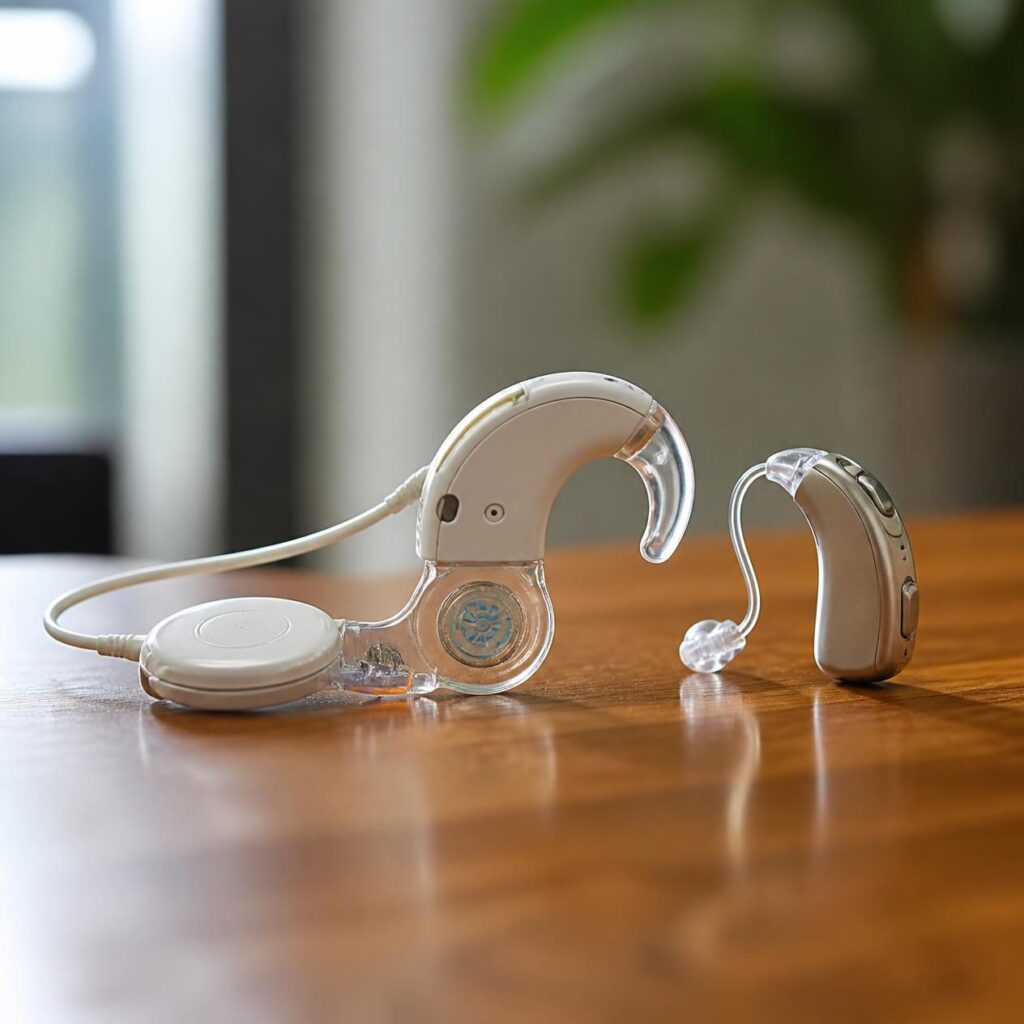
A cochlear implant is a medical device designed to help people with severe to profound hearing loss hear better. It differs significantly from hearing aids in both how it works and who it is intended for. Let’s take a closer look at what a cochlear implant is and how it works.
Overview of Cochlear Implants
A cochlear implant is a medical device primarily intended for people with severe to profound hearing loss. It converts sound into electrical signals and stimulates the auditory nerve through electrodes inserted into the cochlea, allowing the brain to perceive sound.A cochlear implant consists of two parts: an external device and an internal device. Because the internal device must be surgically implanted, cochlear implantation requires surgery.
Differences Between Cochlear Implants and Hearing Aids
Hearing aids work by amplifying sounds, whereas cochlear implants convert sound into electrical signals and stimulate the auditory nerve directly.Hearing aids are generally used for people with mild to severe hearing loss, while cochlear implants are intended for individuals with more severe hearing impairment, typically severe to profound hearing loss.Another major difference is that cochlear implants require surgery, whereas hearing aids do not.
We prepared an article of hearing aids. So, please refer it.
How Do Cochlear Implants Work?
How do humans hear sound? To understand how cochlear implants work, it is helpful to first understand how our ears naturally process sound. In this section, we explain how cochlear implants deliver sound information to the brain.
How Do Humans Hear Sound?
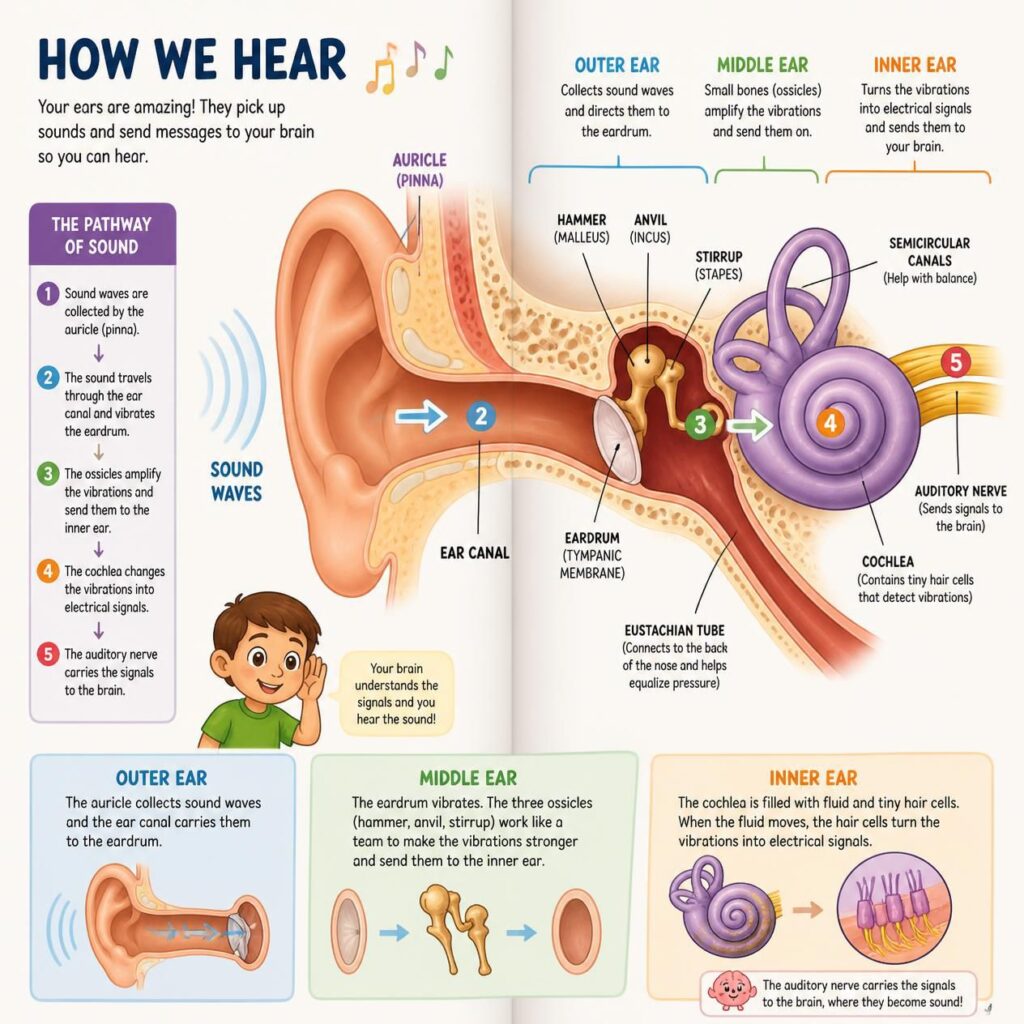
Although we often think that we hear with our ears, it is actually the brain that ultimately recognizes sound.Sound travels through the following pathway:Outer ear → Middle ear → Inner ear → Auditory nerve → BrainThe visible part of the ear is called the auricle (pinna), which collects sound from the environment. The sound then travels through the ear canal and reaches the eardrum.The eardrum vibrates in response to sound, and these vibrations are amplified by three tiny bones in the middle ear called the ossicles.The amplified vibrations stimulate the hair cells in the inner ear (cochlea), where they are converted into electrical signals. These signals are transmitted through the auditory nerve to the brain, where they are recognized as sound.
How Cochlear Implants Deliver Sound
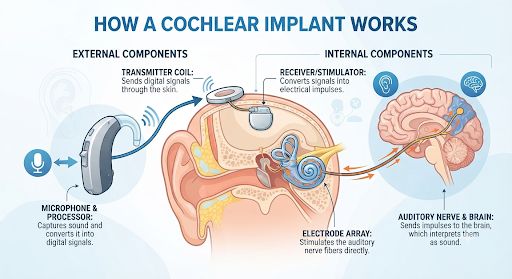
A cochlear implant is a medical device that replaces part of the ear’s hearing function.The external components include a microphone and a sound processor, while the internal components consist of an implant and electrodes.The microphone captures sounds from the environment, and the sound processor converts them into electrical signals. These signals are then delivered to electrodes inserted into the cochlea, which stimulate the auditory nerve.By bypassing damaged hair cells in the inner ear, cochlear implants allow sound information to be transmitted directly to the auditory nerve and ultimately to the brain.
Who Is Eligible for a Cochlear Implant?

Not everyone with hearing loss is a candidate for a cochlear implant. Cochlear implants are generally considered for individuals who receive limited benefit from hearing aids and meet certain medical criteria. In this section, we explain the eligibility criteria for both children and adults in Japan.
Eligibility Criteria
Cochlear implants are not recommended for everyone with hearing loss. In Japan, they are typically considered for individuals with severe to profound hearing loss who do not achieve sufficient hearing improvement with appropriately fitted hearing aids.
Children
Because cochlear implantation requires surgery, newborns cannot receive cochlear implants immediately after birth.In Japan, cochlear implantation is generally considered for children who are at least one year old and weigh 8 kilograms or more, although individual circumstances may vary.
Adults
Adults who do not receive adequate benefit from hearing aids may be considered candidates for cochlear implantation.Eligibility is determined based on hearing test results, speech perception ability, and an overall medical evaluation.
Major Cochlear Implant Manufacturers and Their Features
Today, three major companies manufacture cochlear implants worldwide. While all cochlear implants are designed to restore hearing for people with severe to profound hearing loss, each manufacturer offers different sound processing technologies, accessories, wireless connectivity, and hearing aid compatibility. Understanding these differences can help you choose the system that best fits your needs.
Cochlear
Cochlear is an Australian cochlear implant manufacturer and the global market leader in cochlear implant technology. The company is well known for its extensive support network, wide range of accessories, and long clinical history. Many hospitals and cochlear implant centers around the world have extensive experience with Cochlear devices.
Best for: People who value long-term clinical experience, broad support services, and a large selection of compatible accessories.
MED-EL
MED-EL is an Austrian cochlear implant manufacturer recognized for its flexible electrode arrays, which are designed to minimize trauma to the cochlea during implantation. The company is also known for its focus on preserving residual hearing whenever possible and for providing high-quality sound perception, particularly for music.
Best for: People who want to maximize the possibility of preserving residual hearing or who place a high priority on sound quality and music appreciation.
Advanced Bionics
Advanced Bionics is an American cochlear implant manufacturer. One of its biggest advantages is its close integration with Phonak hearing aids, making it a popular choice for bimodal users who wear a cochlear implant in one ear and a hearing aid in the other.
Best for: Bimodal users who want seamless compatibility between a cochlear implant and a Phonak hearing aid.
Cochlear Implant Manufacturer Comparison
| Brand | Headquarters | Global Market Presence | Residual Hearing Preservation | Bluetooth Connectivity | Hearing Aid Compatibility | Availability | Key Strength |
|---|---|---|---|---|---|---|---|
| Cochlear | Australia | ★★★★★ | ★★★★☆ | ★★★★★ | ★★★★☆ | ★★★★★ | Extensive clinical experience and support network |
| MED-EL | Austria | ★★★★☆ | ★★★★★ | ★★★★☆ | ★★★★☆ | ★★★★☆ | Flexible electrodes and excellent sound quality |
| Advanced Bionics | United States | ★★★★☆ | ★★★★☆ | ★★★★★ | ★★★★★ | ★★★★☆ | Excellent compatibility with Phonak hearing aids |
Note: Features and compatibility may vary depending on the implant model and sound processor.
How to Choose the Right Cochlear Implant Manufacturer
There is no single “best” cochlear implant manufacturer. The right choice depends on your hearing needs, anatomy, lifestyle, and the recommendations of your cochlear implant team.
Here are some general guidelines:
- For first-time cochlear implant users: Cochlear is often chosen because of its long clinical history, extensive support network, and widespread availability.
- For bimodal hearing: Advanced Bionics is an excellent option for people who use a Phonak hearing aid in the opposite ear, thanks to their strong compatibility.
- For music and sound quality: MED-EL is frequently recommended by users who prioritize natural sound quality and music listening.
- Availability: The availability of each manufacturer varies by country and hospital. In Japan, Cochlear devices are available at many cochlear implant centers, although all three major manufacturers are used depending on the medical institution and patient needs.
Ultimately, the most appropriate cochlear implant system should be selected in consultation with your cochlear implant surgeon and audiologist, taking into account your hearing goals, anatomy, and long-term rehabilitation plan.
Cochlear Implant Surgery
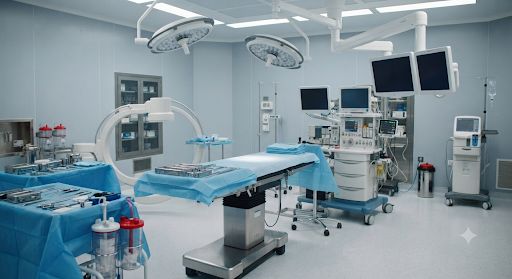
Cochlear implantation requires surgery to place the internal device under the skin and insert the electrode array into the cochlea. In this section, we explain the surgical process, hospital stay, and preoperative examinations.
Surgical Procedure
The general process for cochlear implantation in Japan is as follows:
- Preoperative examinations
- Hospital admission
- Surgery
- Initial activation (“switch-on”)
- Auditory rehabilitation
Preoperative examinations typically include:
- Hearing tests
- Evaluation of hearing aid performance
- CT scans
- MRI scans
- Speech audiometry
- Blood tests
One of the most important aspects of the preoperative assessment is determining whether the patient is likely to benefit from cochlear implantation.Doctors will carefully evaluate the condition of the cochlea and auditory nerve before recommending surgery.The surgery is performed under general anesthesia. During the procedure, the internal implant is placed beneath the skin behind the ear, and the electrode array is inserted into the cochlea. The implant’s function is also tested during surgery.In recent years, less invasive surgical techniques that aim to preserve residual hearing have become increasingly common.
Surgery Time and Hospital Stay
Cochlear implant surgery typically takes between two and four hours.The length of hospitalization varies depending on the medical institution, but in Japan, patients are commonly discharged approximately one week after surgery.
What Does a Cochlear Implant Sound Like?
Wearing a cochlear implant does not mean that sounds will immediately be perceived naturally. Hearing outcomes vary from person to person, and users gradually adapt to the sounds through auditory rehabilitation. In this section, we explain what cochlear implants sound like and how hearing may improve over time.
What Does It Sound Like at First?
Unfortunately, hearing does not improve immediately after cochlear implant surgery.Many people initially describe the sound as electronic, robotic, or mechanical, making it difficult to understand speech.This is why auditory rehabilitation is an essential part of cochlear implant treatment.After surgery, the implant is not activated right away because the surgical site needs time to heal. In Japan, the cochlear implant is typically activated for the first time approximately two to four weeks after surgery.This first activation is called “switch-on” or “initial activation,” when the patient hears sound through the cochlear implant for the first time.
How Does Hearing Change Over Time?
As users gradually adapt to the sounds through rehabilitation, speech understanding and sound recognition often improve over time.For young children, long-term support is especially important because language development progresses alongside auditory development.
Hearing Outcomes Vary from Person to Person
No two cochlear implant users hear sounds in exactly the same way.Some people describe the sound as robotic or electronic at first, while others adapt relatively quickly. Hearing outcomes depend on several factors, including age, the cause of hearing loss, and the length of auditory deprivation before implantation.
Benefits of Cochlear Implants

One of the greatest benefits of cochlear implants is that they can improve hearing for people with severe to profound sensorineural hearing loss who receive limited benefit from hearing aids.Potential benefits include:
- Improved speech understanding
- Support for language development in children
- Better sound awareness
- Greater opportunities for social participation and communication
For many people, cochlear implants provide an opportunity to reconnect with sounds and improve their quality of life.
Disadvantages and Important Considerations
While cochlear implants offer many benefits, they also have several important considerations.Because cochlear implantation requires surgery, it generally involves a greater physical and time commitment than hearing aids. There is also the possibility of affecting residual hearing in the implanted ear.Other considerations include:
- Surgery is required.
- Regular programming adjustments (“mapping”) are necessary.
- MRI examinations may require special precautions.
- Residual hearing may be affected.
- Hearing outcomes vary among individuals.
Understanding both the benefits and limitations of cochlear implants is important before making a treatment decision.
Costs of Cochlear Implants
Although cochlear implants are expensive medical devices, Japan’s national health insurance system significantly reduces the patient’s financial burden. In addition, the High-Cost Medical Expense Benefit System may further lower out-of-pocket costs.In this section, we explain the costs associated with cochlear implantation in Japan.
Surgery Costs
In Japan, cochlear implant surgery is covered by public health insurance.Before insurance coverage, the approximate costs are:
| Item | Approximate Cost |
| Cochlear implant device | ¥1,600,000 – ¥1,700,000 |
| Surgery | ¥400,000 |
| Hospitalization | ¥100,000 – ¥300,000 |
| Preoperative examinations | ¥30,000 – ¥100,000 |
| Total | Approximately ¥2,000,000 – ¥3,000,000 |
Although the total cost may seem very high, the actual amount paid by patients is significantly reduced through Japan’s health insurance system and other support programs.
Rehabilitation Costs
Auditory rehabilitation is also covered by health insurance in Japan.Cochlear implant treatment does not end with surgery. Patients typically require:
- Regular programming adjustments (mapping)
- Auditory rehabilitation
- Periodic follow-up appointments
- Speech and language therapy for children when necessary
Out-of-pocket expenses are generally only a few thousand yen per visit.
Health Insurance Coverage
In Japan, cochlear implants are covered under the national health insurance system. Patients are generally responsible for 30% of the medical costs before additional financial assistance is applied.The cochlear implant device itself has a reimbursement price set by the Japanese healthcare system, currently approximately ¥1,690,000.
High-Cost Medical Expense Benefit System
Japan’s High-Cost Medical Expense Benefit System limits monthly out-of-pocket medical expenses based on income.For example, individuals with an annual income between approximately ¥3.7 million and ¥7.7 million may have a monthly medical expense limit of roughly ¥80,000 to ¥100,000.As a result, the actual cost of cochlear implant surgery is often significantly lower than many people expect. Hospital meal charges and some incidental expenses are typically paid separately.
Physical Disability Certificate
Many cochlear implant users in Japan are eligible for a Physical Disability Certificate (Shintai Shogaisha Techo).Depending on the local government, this certificate may provide access to various support programs and financial assistance. Eligibility requirements vary, so it is advisable to consult your local municipality for details.
Replacement Costs
Over time, cochlear implant technology continues to improve, and some components may need to be replaced.The external sound processor is commonly upgraded every seven to ten years.In Japan, upgrades may be covered by health insurance if certain medical criteria are met.
Lifestyle Considerations for Cochlear Implant Users

Most cochlear implant users can enjoy everyday activities such as working, attending school, traveling, and participating in sports. However, there are some important precautions to keep in mind.
MRI Examinations
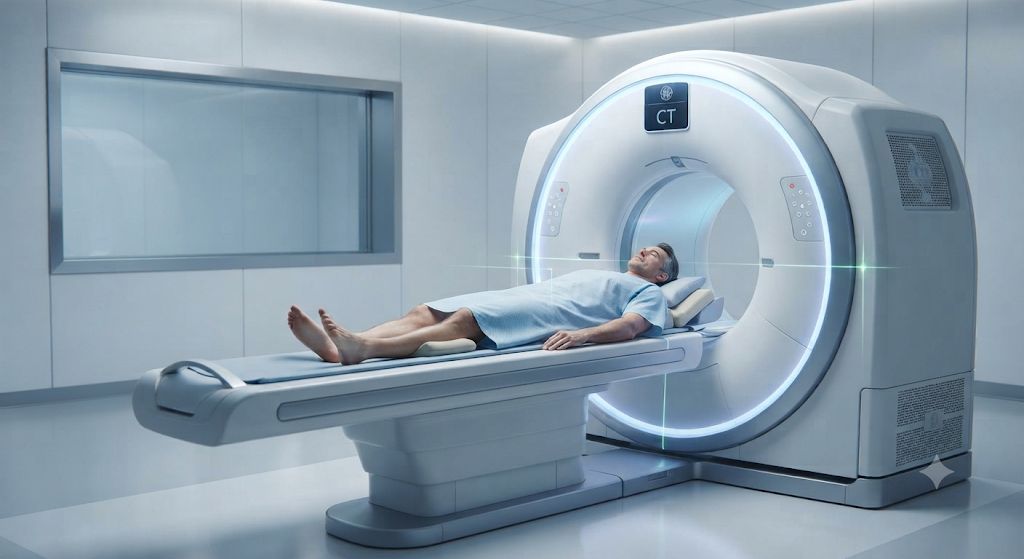
MRI examinations may be subject to restrictions because cochlear implants contain magnets.Many modern cochlear implants are MRI-compatible, but compatibility varies by device model and MRI strength (such as 1.5 Tesla or 3.0 Tesla).Some implants require special preparations before undergoing an MRI scan. Patients should discuss MRI compatibility with their surgeon before cochlear implantation.
Sports
Most sports can be enjoyed safely while using a cochlear implant.However, because the internal implant is placed beneath the skin of the skull, activities involving significant head impacts should be approached with caution.Examples include:
- Rugby
- American football
- Boxing
- Karate
- Judo
- Other martial arts
- Soccer (especially heading the ball)
- Ice hockey
These sports are not necessarily prohibited, but appropriate precautions should be taken.
Bathing and Swimming
The internal implant is waterproof because it is implanted beneath the skin.The external sound processor, however, is an electronic device and should generally be removed before bathing.Many manufacturers also offer waterproof accessories that allow users to enjoy swimming and water activities.
Transportation and Travel
Cochlear implants generally do not restrict transportation or travel.Users can safely use:
- Airplanes
- Shinkansen (Japanese bullet trains)
- Elevators
- Trains
- Bus
During airport security screening, metal detectors may detect the implant. Many manufacturers provide an identification card for cochlear implant users that can be shown to security personnel if necessary.
Frequently Asked Questions
Is there an age limit for cochlear implantation?
There is no upper age limit for cochlear implantation. Eligibility is determined based on overall health, anesthesia risks, and the likelihood of hearing improvement.
Can cochlear implants be used in both ears?
Yes. Some individuals receive cochlear implants in both ears, depending on their hearing condition and medical recommendations.
Which is better: hearing aids or cochlear implants?
Neither is universally better. The appropriate option depends on the degree of hearing loss, hearing aid benefit, and lifestyle needs.
Can I sleep while wearing a cochlear implant?
The internal implant remains in place at all times, but the external sound processor is typically removed before sleeping.
Can I play sports?
Yes. Most sports are possible, although activities involving significant head impacts may require additional precautions.
Can I undergo an MRI scan?
MRI compatibility depends on the cochlear implant model. It is important to confirm MRI-related restrictions before surgery.
Summary
- Cochlear implants are medical devices that stimulate the auditory nerve using electrical signals rather than simply amplifying sound.
- They are a treatment option for people with severe to profound hearing loss.
- Surgery and auditory rehabilitation are required.
- In Japan, public health insurance and financial support programs significantly reduce the cost burden.
- With proper medical care and rehabilitation, cochlear implants can substantially improve hearing and quality of life for many individuals.


コメント